
Imagine a world where your favorite gadgets run continuously, without the frequent need for recharging or the fear of running out of power at critical moments. This isn’t a distant dream but a fast-approaching reality, thanks to the groundbreaking advancements in the field of miniaturized fuel cells. As we delve into the future of portable power, miniaturized fuel cells are set to revolutionize how we power our devices, from smartphones to laptops, and even medical implants. 🚀

The traditional batteries, such as lithium-ion, have been the backbone of our mobile devices for decades. However, they come with limitations, especially concerning capacity, longevity, and environmental impact. Miniaturized fuel cells promise not only to overcome these hurdles but also to offer a more sustainable and efficient approach to energy utilization. But what exactly are miniaturized fuel cells? How do they work, and why are they considered a superior alternative to traditional batteries?
In this comprehensive exploration, we will uncover the mechanics behind miniaturized fuel cells, illustrating how they generate power and why they are more advantageous for both our devices and the environment. We’ll look into the latest innovations that have propelled this technology to the forefront of energy solutions, and discuss the challenges that researchers and developers are tackling to bring these power sources to mainstream markets.
Understanding Miniaturized Fuel Cells
Fuel cells, in their basic form, convert chemical energy from a fuel into electricity through a chemical reaction with oxygen or another oxidizing agent. Miniaturization has made it possible to apply this technology in small-scale applications, such as in portable electronics. This section will break down the technical aspects, helping you understand the unique benefits these cells offer, such as higher energy density and longer operational life compared to conventional batteries.
Innovations Driving Miniaturized Fuel Cells
From advancements in materials science to novel manufacturing techniques, the progress in miniaturized fuel cells is supported by numerous innovations. This segment will introduce you to the cutting-edge developments that are helping improve the performance, durability, and affordability of these fuel cells, making them a viable power source for everyday devices.
Applications of Miniaturized Fuel Cells
While the technology holds promise across various sectors, certain applications are already benefiting from these tiny powerhouses. We will explore how miniaturized fuel cells are being integrated into consumer electronics, medical devices, and even wearables. Discover how these applications are just the beginning of a major shift in how we think about and use energy in our daily lives.
Challenges and Future Outlook
Despite their potential, miniaturized fuel cells face several challenges that must be addressed before they can become ubiquitous. Issues such as cost, public awareness, and infrastructure needs are among the hurdles discussed in this section. Additionally, we’ll peer into the future of this exciting field, contemplating how these challenges might be overcome and the impact that widespread adoption could have on our society and environment.
The integration of miniaturized fuel cells into our daily gadgets could herald a new era of energy use, marked by greater efficiency and sustainability. Whether you are a tech enthusiast, an environmental advocate, or simply someone curious about the next big thing in gadgetry, understanding the potential of these small yet powerful devices is essential. So, let’s power up and dive into the intricate world of miniaturized fuel cells, exploring how they are set to transform our lives and perhaps, the planet. 🔋
Join us as we navigate through the complexities and marvels of this promising technology, uncovering how soon we might be able to bid farewell to the constant search for power outlets, and welcome a new chapter in energy independence. Are you ready to explore the future of power for your gadgets? Let’s get started!
Revolutionizing Portable Energy: The Rise of Miniature Fuel Cells
The quest for more efficient, durable, and environmentally friendly power sources has led to significant advancements in technology, particularly in the field of energy. Miniature fuel cells, a promising innovation, are poised to transform how we power our gadgets, from smartphones to laptops. These devices offer a compelling alternative to traditional batteries, providing higher energy density and longer life cycles. In this section, we delve into the fundamentals of miniature fuel cells, their advantages, and the technological strides that are making them increasingly viable.
Miniature fuel cells work by converting chemical energy from a fuel into electricity through an electrochemical reaction, not dissimilar to a battery. However, unlike batteries, they do not store energy internally but continuously convert fuel as long as it’s supplied. This feature enables them to potentially run longer than conventional batteries. The most common types of fuel cells for portable applications are Proton Exchange Membrane Fuel Cells (PEMFC) and Direct Methanol Fuel Cells (DMFC), each suited for different uses based on their energy output and fuel efficiency.
The development of these miniature powerhouses is not just a technological challenge but also a design one. Engineers and scientists work meticulously to make these fuel cells smaller, more efficient, and more cost-effective. The integration of advanced materials, such as lightweight, high-conductivity electrodes, and innovative design strategies, like microfluidic channels for better fuel distribution, are crucial in this endeavor. Below, we explore how these technological enhancements are paving the way for the future of portable power.
Table of Comparative Analysis: PEMFC vs. DMFC
| Feature | PEMFC | DMFC |
|---|---|---|
| Energy Efficiency | Higher | Lower |
| Fuel Type | Hydrogen | Methanol |
| Operational Lifespan | Longer | Shorter |
| Cost | More Expensive | Less Expensive |
| Environmental Impact | Low | Moderate |
Check out the table above for a quick comparison between PEMFC and DMFC technologies. Understanding these differences can help in choosing the right type of fuel cell for specific applications.
Enhancing Performance with Advanced Materials
The performance of miniature fuel cells is heavily dependent on the materials used in their construction. Breakthroughs in material science have led to the development of components that are not only highly effective but also durable and lighter. For instance, the use of graphene, a form of carbon that is remarkably strong and an excellent conductor of electricity, has been a game changer in increasing the efficiency of the electrochemical reactions within fuel cells.
Moreover, the introduction of nanotechnology in fuel cells has allowed for the enhancement of the surface area of electrodes, which in turn boosts the overall efficiency of the fuel cells. These nanomaterials offer superior conductivity and increased reaction sites, which are essential for achieving higher power outputs. The progress in this area not only enhances the performance but also reduces the overall cost, making the technology more accessible.
These material advancements are crucial for ensuring that fuel cells can meet the demands of modern electronic devices and applications. They not only improve the power output but also help in reducing the environmental footprint of the devices by enhancing the fuel efficiency and longevity of the fuel cells. As research continues to push the boundaries of what’s possible in material science, the future of miniaturized fuel cells looks incredibly promising.
Breakthrough Technologies in Miniature Fuel Cell Design
Innovations in design engineering have also played a pivotal role in the miniaturization and efficiency of fuel cells. The development of microfluidic technology, for instance, has significantly improved the management of fuel within these cells. This technology ensures precise control over the flow of fuel and air, which is critical for maintaining optimal reaction conditions and thus, energy efficiency.
Another exciting development is the use of 3D printing technologies to create more complex internal structures of fuel cells, which can greatly enhance performance. These structures can be optimized for specific reactions and conditions, further pushing the efficiency boundaries of these devices. By integrating these advanced design techniques, manufacturers can produce fuel cells that are not only more powerful but also more reliable and longer-lasting.
The integration of these cutting-edge materials and innovative design strategies marks a significant step forward in the development of miniature fuel cells. As these technologies continue to evolve, the potential applications of fuel cells expand, promising a new era of portable power solutions.
The Future Landscape of Gadgets Powered by Mini Fuel Cells
The continual advancements in miniature fuel cell technology are set to revolutionize the way we use and think about gadgets. With higher energy densities and longer operational times, fuel cells could soon replace conventional batteries in a variety of devices. Imagine smartphones that can run for days without recharging, or laptops that are more powerful yet significantly lighter due to the compact size of fuel cell technology.
This shift not only impacts consumer convenience but also opens up new possibilities in sectors like medical devices, where reliable and long-lasting power sources are crucial. Miniature fuel cells could power everything from wearable health monitors to portable medical equipment, enabling more effective health management and treatment solutions.
Moreover, the environmental impact of adopting fuel cell technology is profoundly positive. By decreasing reliance on disposable batteries, which contain harmful chemicals and heavy metals, fuel cells offer a cleaner, more sustainable alternative. This aspect is particularly appealing as the global community becomes more conscious of environmental issues and moves towards greener technologies.
Exploring Real-World Applications of Mini Fuel Cells
The practical applications of miniature fuel cells are vast and varied. For instance, in the telecommunications sector, these cells can be used to power cell towers in remote areas, reducing the need for frequent maintenance and refueling. In the realm of personal electronics, fuel cells could provide the much-needed longevity and efficiency for devices that are used continuously, such as smartphones and tablets.
In addition to these, the potential for miniaturized fuel cells in automotive applications is particularly intriguing. With further development, these cells could be used to power electric vehicles, significantly increasing their range and efficiency. The integration of fuel cell technology into everyday devices and systems signifies a significant shift towards more sustainable and efficient power solutions, heralding a new era in energy use.
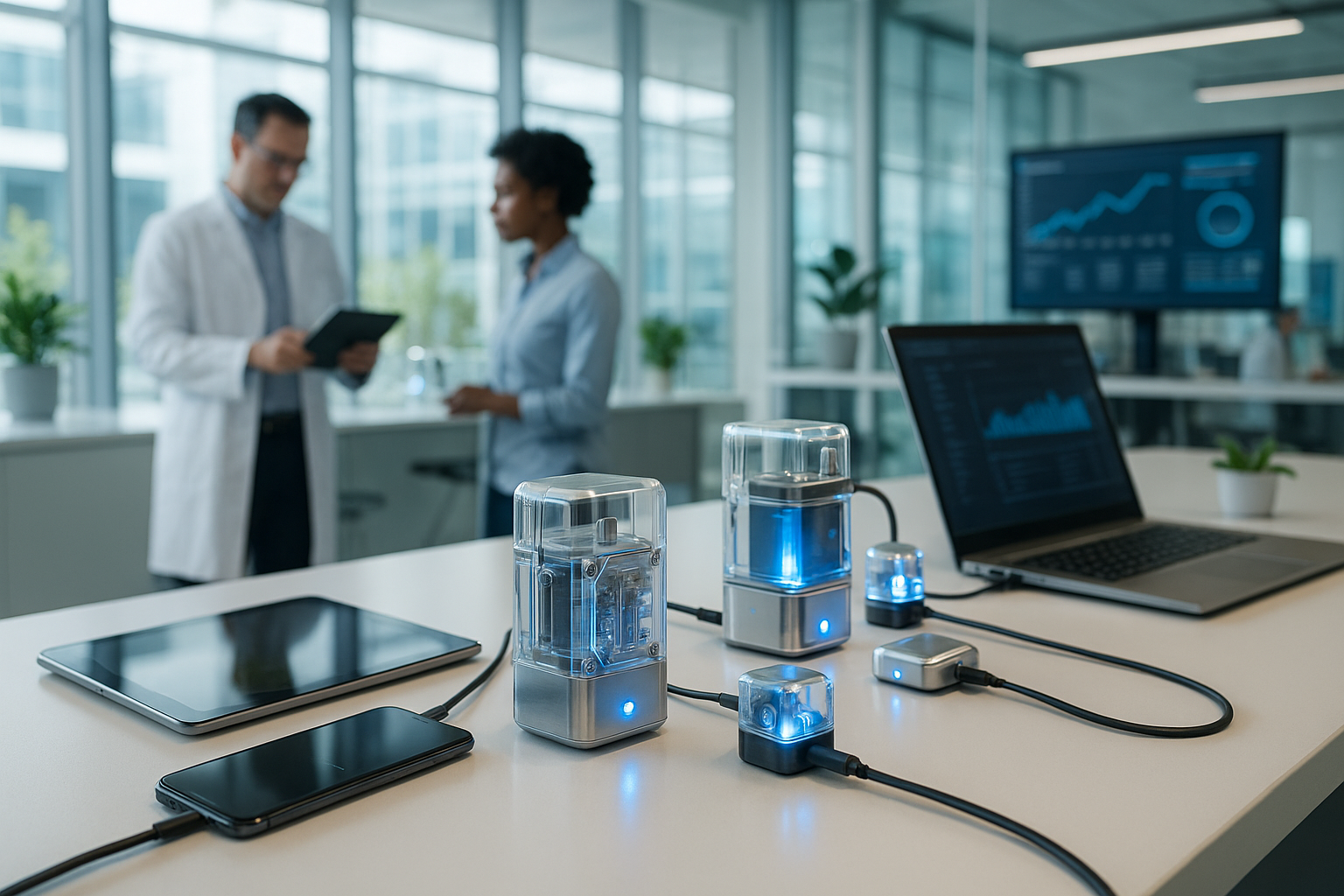
As we continue to innovate and improve upon the existing technologies, the future of portable power looks increasingly dominated by miniature fuel cells. Their ability to provide high energy output, sustainability, and cost-effectiveness makes them an indispensable part of the next generation of power solutions. For a deeper dive into this exciting technology, check out this video by the YouTube channel “Tech Vision” on “The Future of Miniaturized Fuel Cells.”
Conclusion
As we reach the conclusion of our exploration into the revolutionary world of miniaturized fuel cells and their potential to reshape the future of portable power for gadgets, it’s important to recap the key insights and reinforce the significance of this emerging technology.
Miniaturized fuel cells, as we’ve discussed, represent a cutting-edge approach to power generation that is both efficient and environmentally friendly. Unlike traditional batteries that store energy and deplete over time, fuel cells generate electricity through a chemical process involving hydrogen and oxygen, producing only water as a byproduct. This technology is not only cleaner but also holds the promise of longer-lasting power compared to conventional lithium-ion batteries.
The advantages of miniaturized fuel cells are compelling. They offer greater energy density, which means devices can run longer on a single charge. This is particularly critical as we become increasingly reliant on portable electronic devices in our everyday lives. From smartphones and laptops to wearable technology and medical devices, the demand for reliable and sustainable power sources is growing exponentially.
In terms of environmental impact, miniaturized fuel cells could significantly reduce our carbon footprint. By shifting away from fossil fuel-dependent energy sources and embracing hydrogen, a key element in fuel cells that can be sustainably produced, we move closer to a greener and more sustainable future. This shift not only helps in combating climate change but also reduces air pollution, contributing to healthier living environments.
Throughout the article, we also touched on the challenges that lie ahead for the widespread adoption of miniaturized fuel cells. These include issues such as the cost of production, the infrastructure needed for hydrogen production and distribution, and the current bulkiness of fuel cell systems. However, with continuous research and development, solutions to these challenges are emerging. Innovative approaches in materials science and engineering are making fuel cells smaller, more efficient, and more cost-effective.
The potential applications of miniaturized fuel cells are vast and varied. Imagine a world where your phone charges in seconds and lasts for days, where medical implants monitor and adjust their function without the need for frequent surgeries to replace batteries, and where wearable tech aids day-to-day activities without the hassle of charging. This is the world that miniaturized fuel cells can help create.
The importance of this technology cannot be overstated. As we push the boundaries of what’s possible with portable power, the impact will be felt across various sectors, including healthcare, consumer electronics, and even remote sensing and communication technologies.
To stay informed and engaged with the latest developments in miniaturized fuel cells, I encourage you to read more, share this knowledge, and spark conversations about sustainable technology solutions. Whether you’re a technology enthusiast, a professional in the energy sector, or simply someone interested in the future of sustainable technologies, your voice and actions can contribute to driving innovation forward.
In conclusion, the journey towards integrating miniaturized fuel cells into our daily lives is just beginning, and it’s an exciting time to be part of this transformation. As we continue to innovate and improve upon this promising technology, let’s remain committed to the vision of a cleaner, more sustainable world powered by advanced, efficient, and reliable energy solutions. Let’s not just be spectators but active participants in shaping this future.
Remember, every big change starts with a small step. Share this article, talk about the possibilities, and consider how you can support or engage with technologies that contribute to a sustainable future. Together, we can power up our gadgets and our lives, one miniaturized fuel cell at a time. Let’s embark on this exciting journey together, and imagine a future where our power is as limitless as our potential. 🌍✨
Feel free to leave comments, ask questions, or share this article to keep the conversation going. Let’s ignite a global dialogue about the power of miniaturized fuel cells and their role in our sustainable future. Your thoughts and actions can help propel us towards that brighter, more empowered world.
