
🔋 Do you ever wonder what happens to your old mobile phone or laptop batteries once you dispose of them? Most likely, they end up in a landfill, contributing to environmental pollution, due to the hazardous materials they contain. But what if there was a more sustainable way to deal with battery waste? This is where the power of green chemistry comes into play, revolutionizing the way we recycle batteries and making it more eco-friendly. 💚

In our rapidly advancing digital world, the demand for batteries is at an all-time high. From powering our smartphones, laptops, to electric cars, batteries are essential in almost every aspect of our daily lives. However, with the surge in battery usage, comes the inevitable issue of battery waste. Traditional methods of battery recycling can be harmful to the environment and human health, due to the toxic heavy metals and chemicals they release. This is a pressing issue that calls for a more sustainable solution – and this is where green chemistry steps in.
💡Green chemistry, also known as sustainable chemistry, seeks to design and develop products and processes that minimize the use and generation of hazardous substances. This emerging field holds the potential to significantly change the way we recycle batteries, making it not only more efficient but also less harmful to our planet. But how exactly does it work? And what are the benefits and challenges involved? Let’s delve deeper into the eco-friendly power of green chemistry in battery recycling.
🌎A Glimpse into the World of Green Chemistry
Before we dive into the specifics of green chemistry in battery recycling, it’s important to understand what green chemistry is all about. It’s a scientific approach that aims to reduce the environmental impact of chemistry, by designing products and processes that minimize the generation of hazardous substances. Imagine creating a future where chemical innovations play a key role in fostering environmental sustainability. That’s the world green chemistry envisions.
🔬Understanding the Role of Green Chemistry in Battery Recycling
Traditional battery recycling methods often involve energy-intensive processes and the use of harmful solvents. This is where green chemistry presents a game-changing solution. It explores innovative and eco-friendly ways to recycle batteries, thus minimizing hazardous waste, reducing energy consumption, and promoting the recovery of valuable materials. But how is this achieved? And what does it mean for the future of battery recycling?
Ready to join us on this enlightening journey? Keep reading to find out how green chemistry is set to revolutionize battery recycling, making it safer, more efficient, and more sustainable. We’ll also be exploring the challenges faced in implementing green chemistry practices, and the ongoing research and innovations driving this exciting field forward. So buckle up, and let’s get ready to delve into the fascinating world of green chemistry and battery recycling!
🌱 Our journey will take us through the origins and principles of green chemistry, its application in battery recycling, its potential benefits, and the challenges we need to overcome to make this vision a reality. By the end of this exploration, we hope you’ll have a deeper understanding of the power of green chemistry and how it’s revolutionizing the world of battery recycling. So sit back, relax, and let’s embark on this green journey together! 🌿
🌍 Embracing the Green Revolution: The New Wave in Battery Recycling
The world is rapidly shifting towards renewable energy sources, and at the forefront of this shift are batteries. Batteries are a vital component of most renewable energy systems, storing power generated by solar panels, wind turbines, and other methods. However, used batteries pose a significant environmental challenge. With an expected surge in the use of batteries, particularly lithium-ion batteries in electric vehicles and energy storage, efficient and eco-friendly recycling methods are crucial. That’s where green chemistry comes into play. This article will delve into how green chemistry is revolutionizing battery recycling.
Traditional battery recycling methods have several downsides, including high energy consumption, harmful emissions, and potential health hazards to workers. This is where the power of green chemistry shines. Green chemistry, also known as sustainable chemistry, aims to design products and processes that minimize the use and generation of hazardous substances. It applies across the life cycle of a chemical product, including its design, manufacture, use, and disposal. This approach is particularly beneficial for battery recycling. Watch this insightful video from the YouTube channel “TEDx Talks” to understand more about green chemistry.
Green chemistry offers a sustainable and environmentally friendly way to recycle batteries. It can help reduce energy consumption, eliminate harmful emissions, and improve worker safety. Moreover, green chemistry can increase the recovery rate of valuable materials from spent batteries, making the recycling process more profitable. The following sections will delve deeper into how green chemistry is revolutionizing battery recycling.
♻️ The Eco-Friendly Power of Green Chemistry in Battery Recycling
Traditional battery recycling methods use pyrometallurgy, a high-temperature process that recovers metals but creates harmful emissions. Green chemistry, on the other hand, uses hydrometallurgical processes, which are water-based chemical procedures, to recover materials from spent batteries. These processes are more eco-friendly and efficient, leading to higher recovery rates of valuable materials.
One of the key principles of green chemistry is the prevention of waste. This is achieved by designing chemical processes that maximize efficiency and minimize waste generation. For battery recycling, this means designing processes that can recover the maximum amount of materials from spent batteries. Hydrometallurgical processes are particularly effective at this, as they can recover over 90% of the materials in lithium-ion batteries, compared to only around 50% for pyrometallurgical processes.
Another important principle of green chemistry is the use of safer solvents and auxiliaries. Traditional battery recycling methods often use harmful solvents, which can pose health hazards to workers and cause environmental pollution. Green chemistry seeks to replace these hazardous solvents with safer alternatives. For example, some green chemistry-based battery recycling processes use organic solvents or ionic liquids, which are less toxic and more environmentally friendly.
🔬 Green Chemistry vs Traditional Methods: A Comparative Analysis
| Green Chemistry | Traditional Methods | |
|---|---|---|
| Emissions | Low | High |
| Energy Consumption | Low | High |
| Recovery Rate | High (over 90%) | Lower (around 50%) |
| Safety for Workers | High | Lower |
As can be seen from the table above, green chemistry has significant advantages over traditional battery recycling methods in several key areas. It is more environmentally friendly, uses less energy, achieves a higher recovery rate, and is safer for workers. The use of green chemistry in battery recycling is a prime example of how science can help create a more sustainable future.
🔋 The Future of Battery Recycling with Green Chemistry
With the world’s increasing reliance on batteries, the need for effective and sustainable recycling methods will only grow. Green chemistry has the potential to revolutionize battery recycling, making it more efficient, profitable, and eco-friendly. However, further research and development are needed to optimize green chemistry-based recycling processes and make them more widespread.
One exciting area of research is the development of new solvents and catalysts that can improve the efficiency of hydrometallurgical processes. Another is the design of novel processes that can recover even more materials from spent batteries. For example, researchers are exploring ways to recover the lithium in lithium-ion batteries, a valuable material that is often lost in traditional recycling methods.
Green chemistry also has the potential to improve the recyclability of batteries themselves. By designing batteries with recycling in mind, we can make it easier to recover valuable materials and reduce waste. This includes designing batteries with fewer hazardous materials, using more easily recyclable materials, and creating modular designs that make disassembly easier.
🔬 Leading the Charge: Innovative Companies in Green Chemistry for Battery Recycling
Several innovative companies are leading the charge in applying green chemistry to battery recycling. These companies are developing and implementing eco-friendly recycling processes that can recover more materials from spent batteries, reduce energy consumption, and minimize harmful emissions.
- Li-Cycle: This Canadian company uses a patented hydrometallurgical process to recover over 95% of the materials in lithium-ion batteries. Their process is eco-friendly, efficient, and safe for workers.
- American Manganese: American Manganese has developed a novel process that can recover lithium, cobalt, nickel, manganese, and aluminum from spent lithium-ion batteries. Their process is low-cost, environmentally friendly, and has a high recovery rate.
- Aqua Metals: Aqua Metals uses a unique water-based process to recycle lead-acid batteries. Their process is safer and more environmentally friendly than traditional methods, and it can recover virtually all of the lead in spent batteries.
These companies are just a few examples of the exciting work being done in this field. With continued innovation and investment in green chemistry, the future of battery recycling looks bright.
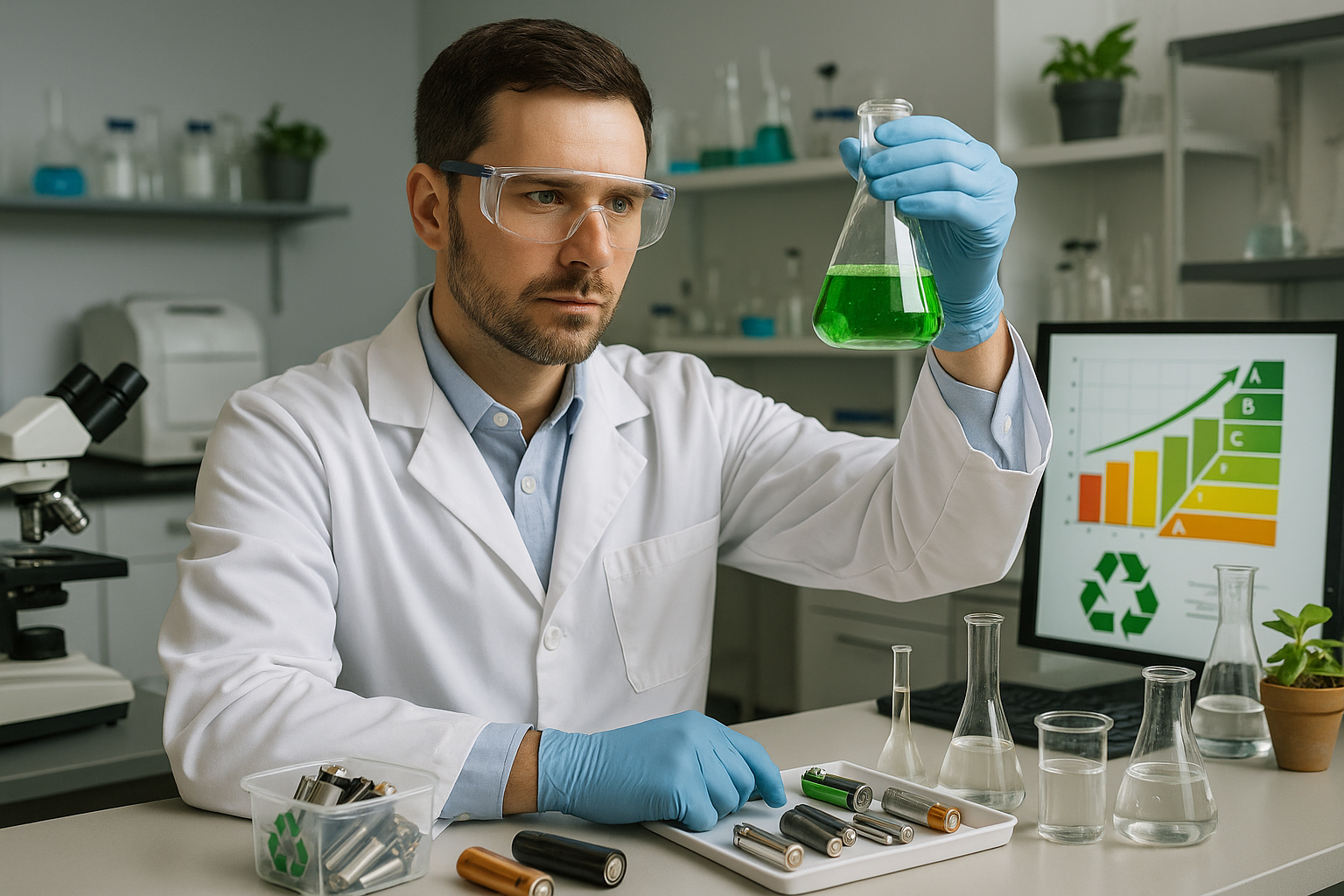
Conclusion
In conclusion, it is undeniable that the recycling of batteries through green chemistry has a transformative and highly impactful role in our society. The journey we have taken in this article paints a clear picture of the importance of this subject, the practical steps involved in recycling batteries, and the promising prospects of green chemistry in revolutionizing battery recycling. If you are just joining us or need a quick recap, here is a brief overview.
We commenced with the understanding of the urgent need for battery recycling, primarily due to the alarming rate of battery disposal and its devastating impact on our environment. We further discussed the potential dangers posed by the harmful chemicals in batteries when not properly disposed of or recycled, hence, the pressing need for efficient battery recycling mechanisms. 🌍
Subsequently, we dived into the fascinating world of green chemistry – a more eco-friendly and sustainable approach to chemical processes. This innovative branch of chemistry is aimed at reducing or eliminating the use or generation of hazardous substances, which aligns perfectly with the goal of a safer and more efficient battery recycling process. 🍃
Following this, we explored how green chemistry is revolutionizing battery recycling. We touched on the fundamental principles of green chemistry, and how they are being applied in creating environmentally friendly methods for battery recycling. From hydrometallurgical methods, to direct recycling, to the use of organic solvents, green chemistry is indeed transforming battery recycling into a safer, more efficient, and more sustainable process. ⚡
In conclusion, the importance of green chemistry in revolutionizing battery recycling cannot be overemphasized. It presents a viable solution to the critical issue of battery disposal, fostering a sustainable and healthier environment for all. It’s an exciting time as we watch this eco-friendly revolution unfold. The path forward, however, requires collective effort. We all have a role to play in promoting and adopting sustainable practices in our daily lives.
We urge you to share this enlightening information with your friends, family, and colleagues. By spreading the word, we can contribute to raising awareness about the importance of battery recycling and the promising power of green chemistry. Let’s help build a cleaner, greener, and more sustainable future. Together, we can make a difference! 🌳
Finally, feel free to leave your thoughts and comments below. We would love to hear your views and any experiences you might have had with green chemistry or battery recycling. Stay tuned for more enlightening topics as we continue to delve into matters that shape our world.
Remember, every step we take towards a more sustainable future counts! Let’s all play our part in this journey. 🌎
