
For most of us, the term ‘lithium-ion batteries’ may not mean much on the surface. Yet these little powerhouses are literally the life force behind so many of our daily necessities — our smartphones, laptops, electric vehicles, power tools, and even some of our home appliances. We’re living in an age of technology, after all, where staying connected and powered-up is more crucial than ever.🔌🔋

However, as the demand for such devices continues to rise, so does the number of spent lithium-ion batteries. With their hazardous components and potential environmental impacts, these spent batteries pose a significant challenge. The solution? Safe and efficient recycling. But, is that even possible with lithium-ion batteries? Oh yes!🌎💚
In this comprehensive guide, we’ll embark on a journey to uncover the ins and outs of lithium-ion battery recycling. We’re going to tackle how they work, why they need special handling during disposal, and most importantly, how you can safely and effectively recycle them, elevating your eco-friendly game. If you’re ready to power up your green lifestyle and be a catalyst for change in our environment, then you’re in the right place. Let’s plug in and get started!
Recycling is far from a new concept. Many of us grew up being taught the importance of reducing, reusing, and recycling. It’s become second nature to toss paper, glass, and plastic into their respective recycling bins. However, when it comes to batteries, particularly lithium-ion ones, the process isn’t as straightforward. These aren’t your typical ‘toss-in-the-bin’ items. They require special handling due to their reactive nature and potentially harmful components. But don’t let this intimidate you! 👀🙅♀️
Through this article, we’ll walk you through the intricacies of lithium-ion battery recycling. We’ll begin by understanding what exactly a lithium-ion battery is and why it’s become so popular. Then, we’ll dive into the reasons why they require special care when it comes to disposal, and the potential hazards they pose if not disposed of correctly. We’ll also explore the environmental and economic benefits of recycling these batteries. And, finally, we’ll arm you with practical, step-by-step guidelines on how to safely recycle your spent lithium-ion batteries.💡🔧
By the end of this article, you’ll be a lithium-ion battery recycling pro! Not only will you know how to dispose of these batteries safely, but you’ll also understand why it’s so important to do so. You’ll be able to make a tangible difference in our environment by ensuring that these potentially harmful items are handled correctly, reducing pollution, and conserving our natural resources. You’ll be powering up your eco-friendly game like never before.👏🍃
Whether you’re an eco-conscious individual looking to improve your green habits, a business owner aiming to establish an eco-friendly workplace, or simply a curious mind eager to understand more about the tech world we live in, this guide has got you covered. So, buckle up, switch on your learning mode, and get ready to deep-dive into the world of lithium-ion battery recycling. Let’s power up towards a greener future!🚀
Unleash the Power of Green: An Introduction to Recycling Lithium-Ion Batteries Safely
Imagine a world where the power to electrify your everyday devices is clean, efficient, and, best of all, renewable. Sounds too good to be true? It’s not. Welcome to the world of lithium-ion batteries, the driving force behind the most popular tech gadgets today. From your pocket-friendly smartphone to your eco-friendly electric vehicle, lithium-ion batteries power them all. However, with great power comes great responsibility. And in this case, it’s the responsibility to recycle these energy powerhouses in a safe, eco-friendly way. Let’s get started with our ultimate guide to safely recycling lithium-ion batteries.
But before we delve into the ‘how’, let’s understand the ‘why’. Why is it important to recycle lithium-ion batteries? Here’s an interesting fact: according to the Environmental Protection Agency (EPA), for every million cell phones we recycle, we can recover 35,000 pounds of copper, 772 pounds of silver, 75 pounds of gold, and 33 pounds of palladium. Not only does recycling save precious resources, but it also reduces the demand for virgin materials, thereby decreasing mining activities and their associated environmental impacts.
There’s more to it. Safely recycling lithium-ion batteries reduces the risk of fires at waste facilities. Lithium-ion batteries can cause fires if they are punctured, damaged, or exposed to high temperatures, leading to what’s known as ‘thermal runaway’. This is a dangerous situation where the battery overheats and can potentially explode, causing fires in waste facilities. Thus, proper recycling of these batteries is crucial for both environmental and safety reasons.
Know Your Battery: Understanding Lithium-Ion Batteries
Before you can embark on the journey of recycling, it’s important to first understand what lithium-ion batteries are and why they are different from other batteries. Lithium-ion batteries are rechargeable batteries that use lithium ions as their primary component. They have a high energy density, allowing them to store more energy in a smaller space. This is why they are the preferred choice for power-hungry devices like laptops, smartphones, and electric vehicles.
However, the very thing that makes lithium-ion batteries so efficient also makes them difficult to recycle. The high energy density and the presence of lithium make these batteries highly reactive, which poses a challenge when it comes to recycling. Furthermore, the variety of materials used in these batteries, including cobalt, nickel, and manganese, require different recycling processes, adding to the complexity.
Despite these challenges, safe and effective recycling methods for lithium-ion batteries do exist. Let’s explore them in the next section.
Safely Recycling Lithium-Ion Batteries: The How-To Guide
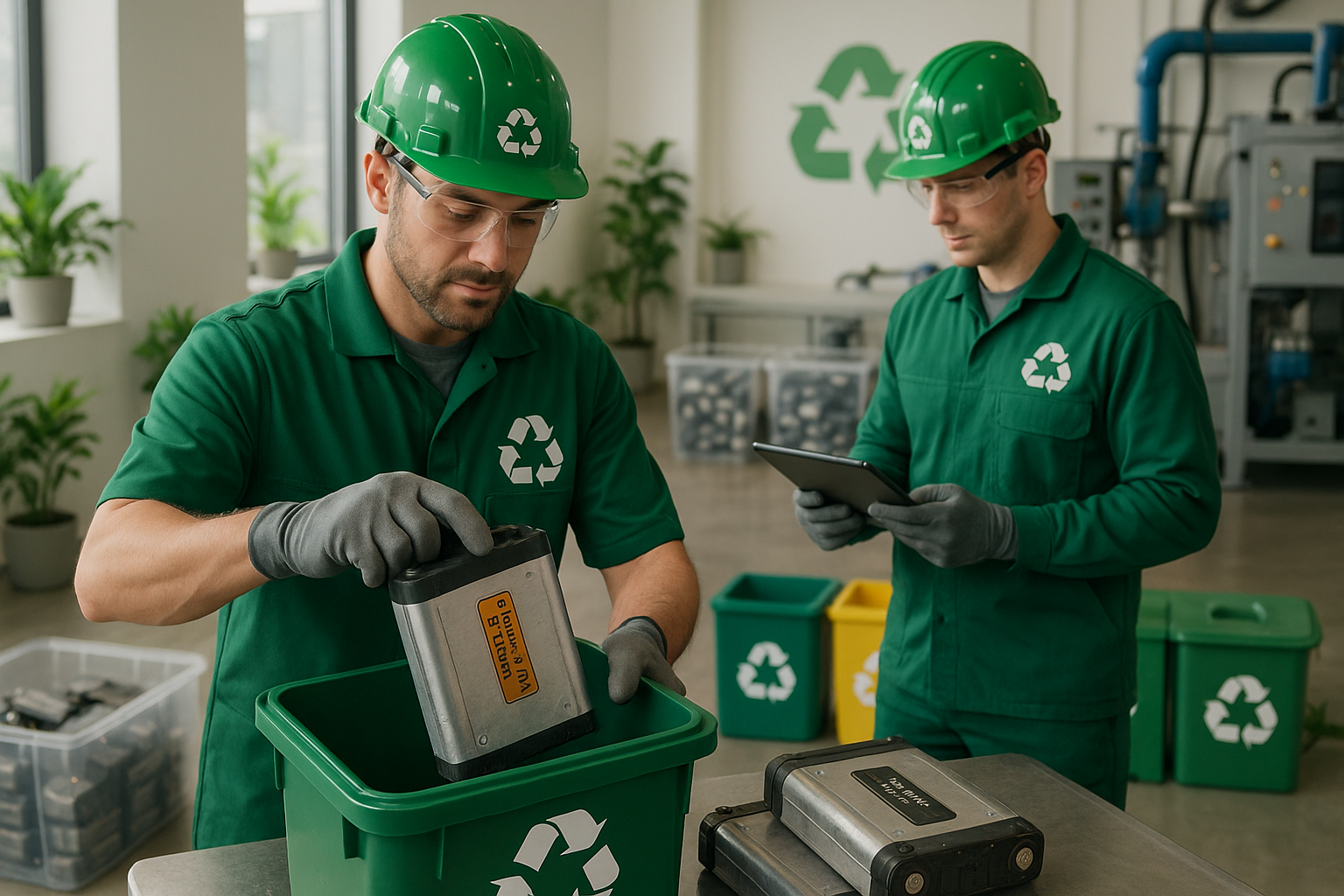
So how exactly do you recycle a lithium-ion battery? Well, the first thing to remember is that you should never try to recycle lithium-ion batteries at home. Due to their reactive nature, lithium-ion batteries should always be recycled at authorized recycling centers or through manufacturer take-back programs. These places have the necessary equipment and safety measures to handle these batteries.
One popular recycling method is known as pyrometallurgy, or the “smelting” method. This involves melting the batteries in a large furnace, which separates the valuable metals from the rest of the materials. However, this method is energy-intensive and produces harmful emissions, which is why researchers are exploring other, more eco-friendly methods.
One such method is hydrometallurgy, where batteries are dissolved in chemicals to extract valuable metals. This method is less harmful to the environment, but it is more complex and requires a more thorough separation process before recycling.
Step by Step Guide to Recycling Lithium-Ion Batteries
- Identify the type of battery you have. Check the label on the battery or the user manual of your device to confirm it’s a lithium-ion battery.
- Find a local recycling center or take-back program. Some retailers, like Best Buy and Staples, offer battery recycling programs.
- Place the battery in a clear plastic bag. This is a safety measure to prevent any accidental contact with other objects.
- Drop off the battery at the recycling center or at the designated drop-off point for the take-back program.
Comparing Recycling Methods: Pyrometallurgy vs Hydrometallurgy
| Method | Advantages | Disadvantages |
|---|---|---|
| Pyrometallurgy (Smelting) | Fast and efficient in extracting metals | Energy-intensive and produces harmful emissions |
| Hydrometallurgy (Chemical Dissolution) | Eco-friendly and able to recover more materials | Complex and requires thorough separation process |
Looking at the table above, it’s clear that both methods have their pros and cons. While smelting is efficient and fast, it’s also energy-intensive and can harm the environment. On the other hand, chemical dissolution is more eco-friendly and can recover more materials, but it’s also more complex and requires a more thorough separation process.
To better understand these methods, check out this detailed video on YouTube by “Battery Recycling – Inside the World’s #1 Battery Recycler” by Advanced Battery Concepts. It offers a comprehensive look at how lithium-ion batteries are recycled, and the challenges the industry faces in making the process more sustainable.
Let’s Up Our Game: Advancements in Lithium-Ion Battery Recycling
As our reliance on lithium-ion batteries grows, so does the need for effective and sustainable recycling methods. The good news is, researchers and tech giants are constantly working on new ways to improve the recycling process. For instance, Apple has developed a robot named ‘Daisy’ that can disassemble up to 200 iPhones per hour, recovering valuable materials that can be reused in new devices.
Meanwhile, researchers are exploring the potential of nanotechnology in recycling lithium-ion batteries. Nanotechnology, the manipulation of matter on an atomic and molecular scale, could offer a solution to the complexity of the current recycling methods. By targeting specific materials at a nano level, researchers hope to increase the efficiency of the recycling process and recover more valuable materials.
Moreover, companies like Tesla are looking into ‘closed-loop’ recycling systems. In this system, old batteries from Tesla vehicles would be recycled to create new batteries, thereby creating a continuous cycle of use and reuse. Such initiatives reflect the evolving approach to lithium-ion battery recycling, one that seeks to balance efficiency, safety, and environmental sustainability.
Remember: Safe Recycling is Everyone’s Responsibility
While advancements in recycling technology are crucial, it’s equally important for each of us to play our part in ensuring the safe disposal and recycling of lithium-ion batteries. Whether it’s taking the time to separate our e-waste, or choosing to buy from companies that prioritize eco-friendly practices, our actions can make a big difference.
Remember, every lithium-ion battery recycled is one step closer to a greener, more sustainable future. So, let’s power up our eco-friendly game and embrace the ultimate guide to safely recycling lithium-ion batteries!
Conclusion
In concluding our comprehensive exploration of the ultimate guide to safely recycling lithium-ion batteries, it’s paramount to underscore the key insights we’ve garnered. Throughout this discourse, we’ve ventured into the various facets of lithium-ion batteries, their immense utility in the modern world, and the pressing need for their safe and eco-friendly disposal.🌍
In essence, lithium-ion batteries are ubiquitous power sources for numerous devices we depend on daily, ranging from laptops💻, smartphones📱, power tools🛠️, to electric vehicles🚗. As indispensable as they are, the environmental quandary they pose when improperly discarded is equally substantial.
We’ve discussed the detrimental implications of disposing of lithium-ion batteries inappropriately, which not only endanger the environment but also human health. Toxic heavy metals, fire hazards, and the waste of precious materials are just some of the consequences we’re faced with in such scenarios.
By emphasizing the significance of recycling, we’ve highlighted how this process is a viable solution for mitigating the adverse impacts of lithium-ion batteries on our ecosystem. Crucially, recycling these batteries allows for the recovery of valuable metals like cobalt, lithium, and nickel, reducing the demand for virgin materials and thereby contributing to sustainable practices.
We’ve walked you through the different steps involved in recycling lithium-ion batteries, from collection and sorting to disassembly, processing, and recovery of materials. By offering a peek into the future, we’ve shed light on innovative technologies and methods in the pipeline aimed at improving the efficiency and safety of this recycling process.
Guidelines on how to properly store and prepare your used lithium-ion batteries for recycling were also provided, emphasizing the role each of us plays in this eco-friendly game.
As we bring this discussion to a close, it is essential to reiterate the importance of safely recycling lithium-ion batteries. In our fast-paced, technology-driven world, these power sources are not going away anytime soon. As such, the responsibility falls on all of us to ensure their proper disposal, thereby safeguarding our environment for future generations.
Moreover, as the world continues to evolve towards more sustainable and eco-friendly practices, the safe recycling of lithium-ion batteries represents a significant stride in the right direction. By promoting responsible recycling, we can help curb environmental pollution, conserve resources, and contribute to the global sustainability agenda.
Ultimately, we hope that this guide has proven insightful and prompts you to take action. Whether it’s by disposing of your used batteries at designated recycling centers, promoting safe recycling practices among your peers, or simply sharing this article to raise awareness, every step counts towards powering up our eco-friendly game.🌿
The road to a more sustainable future starts with us. So let’s get started and keep the conversation going. Share your thoughts, experiences, and suggestions in the comments section. We are eager to hear from you and continue learning together.
Remember, together we can make a difference. So let’s power up our eco-friendly game, one lithium-ion battery at a time.
