
Imagine a sensation of absolute freedom. Freedom to use your electronic devices as much as you desire without having to anxiously glance at the battery icon. Freedom to go off-grid with the confidence that your devices will last as long as you need them to. In a world that’s becoming increasingly powered by batteries, we’re often shackled by their limitations. But what if I told you, there’s a technological revolution on the horizon ready to grant us this freedom? We’re talking about the untapped potential of high-performance batteries powered by nano-structured electrodes. Exciting, right?😊

It’s time to buckle up as we take a thrilling deep-dive into the electrifying world of advanced battery technology. We’ll explore the nanoscopic landscapes where mind-blowing chemical reactions happen every microsecond, fuelling our devices and, quite literally, our lives. We’ll delve into the nanomaterials science that’s pushing the boundaries of what’s possible, harnessing power in ways that you may find hard to believe. All these could potentially redefine what ‘high-performance’ really means for batteries. Are you ready for the ride? ⚡
The power of a battery, believe it or not, starts at a scale that’s invisible to the naked eye. Here, at the nanoscale, the properties of materials take a twist, often resulting in phenomenal performance improvements. Nano-structured electrodes, a relatively recent invention, are the very epitome of this nanoscale wonder.🔬
What’s in store?
In this comprehensive guide, we’ll first get you up to speed with the basics of battery technology. Understanding the current scenario will lay the groundwork for appreciating the impressive advancements on the horizon. We’ll break down the chemistry of traditional batteries and highlight their drawbacks, paving the way for the introduction of the ‘nano-revolution.’
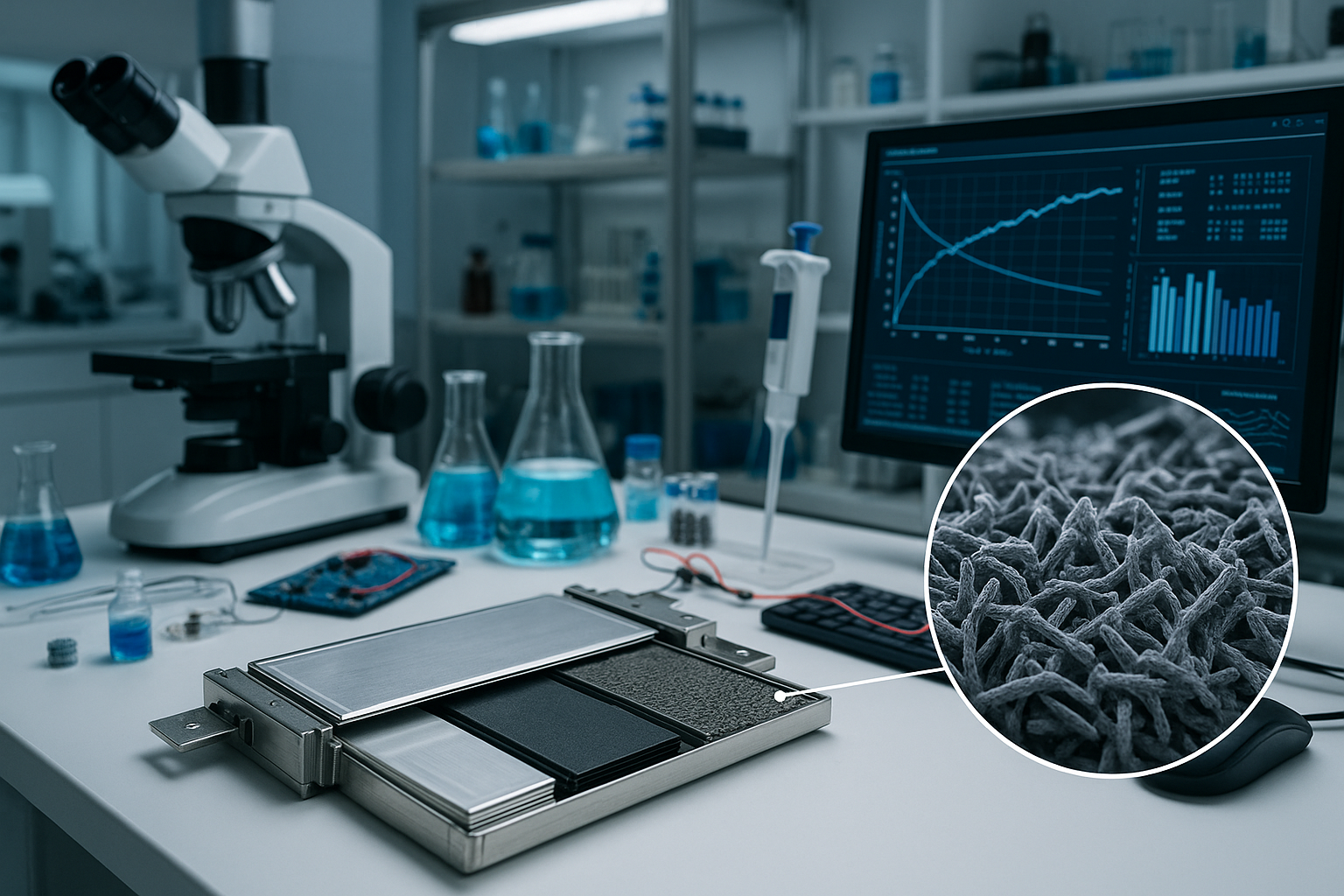
Next, we’ll demystify the concept of nano-structured electrodes. We’ll help you visualize the nano-world, explaining how these miniature marvels can pack in a mighty punch of power.👊 We’ll delve into the research breakthroughs that have made this technology possible and explore how it could shape the future of batteries.
After that, we’ll dive into the practical implications of these advancements. How would a shift to nano-structured electrodes impact various industries, from smartphones to electric vehicles, and even renewable energy systems? How much closer are we to realizing this shift, and what hurdles remain? These are some of the tantalizing questions we’ll tackle.💼🚗
Finally, we’ll contemplate the broader societal implications of this emerging technology. How could it transform our daily lives and the way we interact with technology? Could it truly provide the freedom from power outlets we’ve all been dreaming of? And more importantly, is it sustainable and environmentally friendly?🌍
Through this exploration, we hope to not only inform but inspire. To incite excitement about the possibilities that lie ahead and to provoke thought about how we, as individuals and as a society, can harness this potential to shape a better future. So, let’s embark on this electrifying journey together, shall we? 🚀
Embrace the Future: Powering Up with Nano-Structured Electrodes
Imagine a world where your devices can power up in seconds and keep running for days. Sounds like science fiction, doesn’t it? But with the advent of nano-structured electrodes, this could soon become a reality. Nano-structured electrodes are the future of high-performance batteries, promising superfast charging, longer-lasting power, and a massive boost to the performance of everything from smartphones to electric cars.
At their core, batteries work by moving ions from one electrode to another. The faster and more efficiently this process can happen, the better the battery. This is where nano-structured electrodes come into play. By reducing the size of the electrode material to the nanoscale, we can increase the surface area available for ion movement, thereby greatly enhancing the performance of the battery.
In this article, we delve into the world of nano-structured electrodes, exploring their potential and benefits. We will examine how they work, compare them to traditional battery technologies, and look at the exciting opportunities they present for the future of energy storage.
Unraveling the Magic: How Nano-Structured Electrodes Work
Before we delve into the workings of nano-structured electrodes, let’s first understand what ‘nano’ actually means. The term ‘nano’ refers to one billionth of a meter. To put it in perspective, a single human hair is about 80,000 nanometers wide. The ‘nano’ in nano-structured electrodes refers to the size of the materials used – we’re talking about particles that are tens to hundreds of nanometers in size.
Now, onto the magic of nano-structured electrodes. They work by increasing the surface area available for chemical reactions to take place. Think of it like this: if you break a sugar cube into smaller pieces, it will dissolve faster in your coffee because more of its surface area is exposed to the water. Similarly, by breaking down the electrode material into nano-sized particles, more of its surface area is exposed to the ions in the battery, enabling faster and more efficient energy storage and release.
The production of nano-structured electrodes involves various advanced techniques, such as sol-gel processes, hydrothermal synthesis, and nanoparticle deposition. These processes allow for the precise control over the size, shape, and composition of the electrode materials, resulting in superior battery performance. For an in-depth look at how these techniques work, check out this informative video from the YouTube channel “The Science of Everything” (insert YouTube link here).
Advantages of Nano-Structured Electrodes: A New Era for Batteries
So, what makes nano-structured electrodes so special? Why are they considered the future of high-performance batteries? Let’s dive into some of their standout advantages:
- Superfast charging: Nano-structured electrodes can dramatically reduce charging times. This is because the increased surface area allows for more efficient ion movement, which in turn speeds up the charging process.
- Longer battery life: These electrodes can also extend the lifespan of batteries. This is because the nanoscale materials can withstand more charge and discharge cycles before they start to degrade.
- Improved safety: Nano-structured electrodes can enhance the safety of batteries. This is because their superior thermal stability can help prevent overheating, a common issue with traditional batteries.
Now, let’s compare nano-structured electrodes with traditional battery technologies in the table below:
| Feature | Nano-Structured Electrodes | Traditional Battery Technologies |
|---|---|---|
| Charging time | Superfast | Slow |
| Battery life | Long-lasting | Shorter lifespan |
| Safety | Improved | Potential for overheating |
To further explore the advantages of nano-structured electrodes, consider watching this fascinating video from the YouTube channel “Battery Revolution” (insert YouTube link here).
Unleashing the Potential: The Future of Nano-Structured Electrodes
The potential of nano-structured electrodes is immense. They can revolutionize not only personal electronics like smartphones and laptops, but also larger-scale applications like electric vehicles and grid storage. With their enhanced performance, we could see electric cars that charge in minutes instead of hours, or homes powered by solar energy even on cloudy days.
Moreover, the scalability of nano-structured electrodes opens up exciting possibilities for mass production. While the production of these electrodes currently involves advanced techniques, research is underway to develop simpler and more cost-effective methods. This could make high-performance batteries more affordable and accessible, leading to a widespread shift in how we power our devices and systems.
However, like any emerging technology, nano-structured electrodes face some challenges. These include issues related to material stability, manufacturing costs, and environmental impact. Researchers are actively working to address these challenges and pave the way for a more sustainable and efficient energy future. To stay updated on these advancements, consider subscribing to the YouTube channel “Energy Innovations” (insert YouTube link here).
Wrapping Up: Charge into the Future
As we stand on the cusp of a new era in energy storage, the future looks electrifying. Nano-structured electrodes hold the promise of superfast charging, longer-lasting batteries, and improved safety. While challenges exist, ongoing research and development are propelling us towards a future where powering our devices could be as simple as blinking.
So, next time you’re waiting for your phone to charge or your electric car to power up, remember: the future of energy is not far away. And with nano-structured electrodes, that future looks brighter – and more powerful – than ever.
Keep exploring. Keep innovating. And most importantly, keep charging into the future.
Conclusion
In concluding, it’s quite clear that nano-structured electrodes offer a great potential for powering our devices with high-performance batteries. The in-depth exploration of this subject unravels key points and exciting possibilities that this technology provides. We’ve seen the science that underpins nano-structured electrodes, delved into the workings of these tiny powerhouses, and understood how their structure and size contribute to their exceptional performance.
In essence, nano-structured electrodes constitute an exciting advancement in the battery technology sector. This is because they offer a significant boost to energy storage capacity, efficiency, and speed of charge and discharge. Such characteristics are imperative in our modern digital age, where the demand for energy-efficient and fast-charging devices is at an all-time high. 👍
Another noteworthy point we’ve considered is the versatility of nano-structured electrodes. They can be tailored to suit different applications, from portable devices to electric vehicles and large-scale energy storage systems. This adaptability underscores their potential to revolutionize not only our everyday tech gadgets, but also our transport systems and power grids. 🚀
Nevertheless, we should not overlook the challenges that accompany the application of nano-structured electrodes. These include issues of stability, safety, and cost. Yet, ongoing research and development efforts hold the promise of overcoming these obstacles and bringing us closer to the widespread utilization of this technology. 🧪
Now, let’s not forget the environmental aspect. The quest for greener energy solutions is of paramount importance. The good news is, nano-structured electrodes could play a pivotal role in this quest, contributing to more sustainable and efficient energy storage systems. 🌱
To revisit the intricate details of nano-structured electrodes, we have cited several references throughout this article, such as Science Direct and Nature. These sources provide an expansive wealth of knowledge on the subject, and we encourage you to delve deeper.
In conclusion, nano-structured electrodes are more than just a fascinating scientific concept – they are a testament to human innovation and our relentless pursuit of better, faster, and greener technologies. They bring us a step closer to a future where our devices are powered by high-performance batteries that are efficient, fast-charging, versatile, and environmentally friendly. 💡
So, what are your thoughts on nano-structured electrodes and their potential? Feel free to comment, share, or apply what you’ve learned. Your engagement is what drives us to continue exploring these cutting-edge topics. Together, let’s stay at the forefront of technology and innovation! 🌐
Remember, the future is not something we enter. The future is something we create. And with nano-structured electrodes, we’re creating a future of high-performance batteries.🔋
Keep exploring, keep learning, and most importantly, keep powering up! 🔌
