
🌍 As the world keeps turning, so do our innovative minds. We’re constantly on the hunt for new ways to make life more sustainable and efficient, and in recent years, one area that has captured our attention is the battery industry. Specifically, the essential components required to power these batteries. As you read these lines, your mind might be wandering towards traditional mining, picturing massive operations extracting materials from the Earth’s crust. However, the focus of today’s discussion is not on traditional mining, but rather its modern and urban counterpart: Urban Mining.

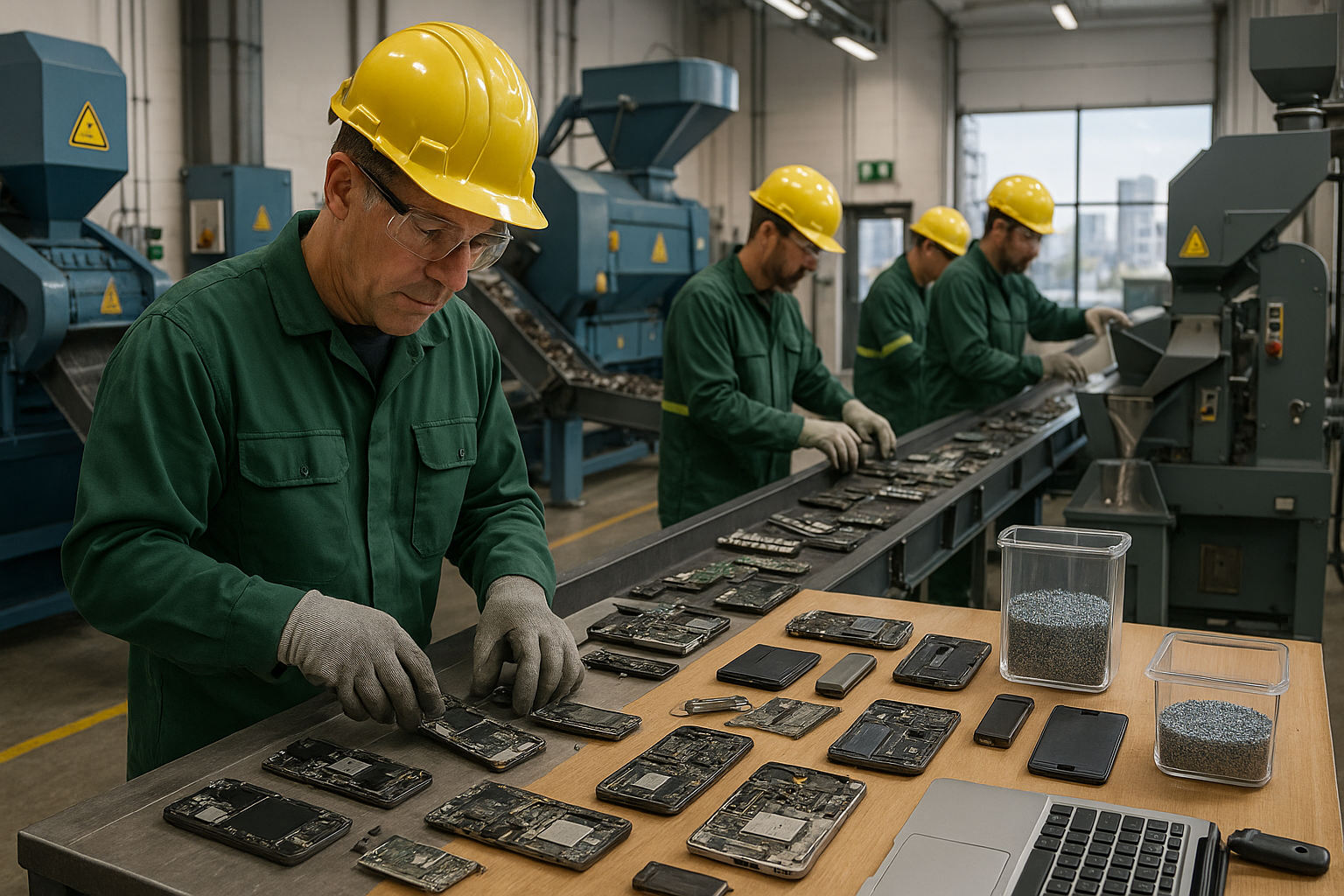
🏙️ “Urban Mining” might sound like an oxymoron at first glance, but it refers to the process of reclaiming compounds and elements from products, buildings and waste. In a world where cities are becoming more populated, urban mining for essential battery components is not just a trend; it’s a necessity.
🔋 The growing demand for batteries, particularly lithium-ion batteries, has skyrocketed in recent years, thanks to their use in electric vehicles, smartphones, laptops, and renewable energy storage. However, the extraction of key components such as lithium, cobalt, nickel, and manganese through traditional mining has been associated with numerous environmental and ethical issues. This is where urban mining can step in, providing a more sustainable and socially responsible alternative.
But before we delve deeper, let’s take a quick glance at the main topics we’ll explore in this comprehensive blog post:
🔍 What exactly is Urban Mining and how does it work?
In the simplest terms, urban mining is the process of extracting valuable materials from urban waste. But how is it done? And what makes it different from traditional mining? We’ll provide a detailed explanation and discuss its benefits and challenges.
📊 The economics of Urban Mining: a viable alternative?
Is urban mining really profitable? Can it truly replace traditional mining? We’ll examine the financial feasibility of urban mining and provide some real-world examples.
🔧 The process of extracting essential battery components through Urban Mining
What does the process of extracting lithium, cobalt, nickel, and manganese from waste look like? We’ll give you a step-by-step guide to the process, highlighting the innovative technologies used.
💡 The future of Urban Mining
What could the future hold for urban mining? We’ll explore the potential this burgeoning industry has for revolutionizing the way we obtain essential battery components.
🗺️ By journey’s end, we hope you’ll have a newfound appreciation for the untapped potential that lies within our urban landscapes. A treasure trove of valuable materials is hidden in plain sight, and urban mining could hold the key to unlocking it. So, buckle up and join us on this exciting exploration of urban mining for essential battery components – a journey that’s not just about reshaping the battery industry, but about paving the way for a more sustainable future.
💼 Whether you’re a seasoned professional in the battery industry, a budding entrepreneur looking for the next big thing, an environmental enthusiast, or simply a curious reader, this comprehensive guide to urban mining is designed to enlighten, engage, and inspire you. Let’s delve in!
Discovering Hidden Wealth: Unearthing the Potential of Urban Mining
The quest for sustainable development has led us to an unexpected treasure trove – our cities. Urban mining, the process of recovering raw materials from waste, discarded products, and infrastructure, has the potential to be a goldmine for essential battery components. There’s a whole world of valuable resources hidden within our urban landscapes, just waiting to be tapped into. Let’s dive in and discover the potential of this new frontier in resource recovery!
The concept of urban mining is intriguing because it doesn’t involve traditional mining methods that are usually destructive to the environment. Instead, urban mining focuses on the reuse and recycling of materials that are already in circulation within our cities, thereby reducing waste, conserving natural resources, and reducing greenhouse gas emissions.
Central to the potential of urban mining is the fact that our cities are rich in materials needed for batteries. Battery production is a growing industry, driven by the increasing demand for electric vehicles and renewable energy storage. However, the extraction of necessary raw materials, such as lithium, cobalt, and nickel, can be environmentally damaging and often occurs in politically unstable regions. Urban mining presents an innovative solution to this problem, providing a more sustainable and ethical supply of essential battery components.
The Power of Urban Mining: Unleashing the Potential
The potentials of urban mining are immense. According to a study by the United Nations University, the amount of electronic waste (e-waste) alone generated globally in 2016 contained an estimated 435,000 tons of rechargeable batteries. This equates to a massive repository of valuable metals and other materials that could be reused.
What’s even more compelling is that the concentration of valuable metals in e-waste is often significantly higher than in natural ores. For example, the concentration of gold in e-waste is estimated to be 40-50 times greater than that of the richest natural ores. It’s clear that if properly harnessed, urban mining could offer a vast, and comparatively rich, source of materials for battery production.
However, to unlock this potential, effective systems for collection, sorting, and processing of waste materials are needed. This includes innovations in recycling technologies and infrastructure, changes in product design to facilitate disassembly and material recovery, and effective policies and regulations to support these shifts.
Comparing Urban Mining and Traditional Mining
How does urban mining measure up against traditional mining in terms of sustainability and cost-effectiveness? Let’s compare the two approaches.
| Criteria | Urban Mining | Traditional Mining |
| Environmental Impact | Lower – primarily recycling and reusing existing materials | Higher – can cause deforestation, pollution, and habitat destruction |
| Cost | Can be lower – depends on the value of the material and recycling technology | Can be higher – includes exploration, extraction, and processing costs |
| Social Impact | More ethical – materials are sourced from within cities, reducing the need for mining in politically unstable regions | Can be unethical – often involves exploitation and displacement of local communities |
As seen in the table above, urban mining generally has lower environmental impacts and can be more cost-effective and ethical than traditional mining, depending on the specifics of the materials and technologies involved.
Challenges and Solutions in Urban Mining
Despite the significant potential of urban mining, it’s not without its challenges. One of the primary hurdles is the collection and sorting of waste materials. Currently, many valuable materials end up in landfill because they are not correctly separated and collected for recycling. Innovations in sorting technology, such as advanced sensor-based sorting, could significantly improve this process.
Another challenge is the development of efficient and cost-effective recycling technologies. While some materials, such as gold and copper, are relatively easy to recover from e-waste, others, like lithium and cobalt, are more difficult. Research into new recycling technologies and techniques is crucial for overcoming this challenge.
Policy and regulation also play a crucial role in promoting urban mining. Effective policies can incentivize recycling, make producers responsible for the end-of-life management of their products, and encourage the design of products for easier disassembly and recycling.
Diving Deeper into Urban Mining
Interested in learning more about urban mining? Check out this informative video from the World Economic Forum titled “The treasure hidden in our cities.” The video provides an excellent overview of urban mining and its potential to help us meet our sustainability goals. It also highlights some of the innovative urban mining projects already underway around the world. Watch the video below:
Video Title: The treasure hidden in our cities
YouTube Channel: World Economic Forum
The Future of Urban Mining
The future of urban mining looks promising. As we continue to innovate and refine our recycling technologies, the treasure trove of materials hidden within our cities will become increasingly accessible. At the same time, the growing demand for batteries and other high-tech products means that the need for these materials is only going to increase.
Moreover, as awareness of the environmental and social impacts of traditional mining continues to grow, urban mining is likely to become an increasingly attractive alternative. With the right combination of technology, policy, and public awareness, urban mining could play a significant role in building a more sustainable and circular economy.
Unlocking the potential of urban mining is a challenging but exciting journey. The road ahead is full of opportunities for innovation, collaboration, and progress towards a more sustainable future. Are you ready to dig in and uncover the hidden treasures of our cities?
Conclusion
In concluding this comprehensive article, it is clear that the practice of urban mining for essential battery components is an avenue that offers immense potential. This detailed exploration has brought to light the various facets of this concept and how it is unlocking a treasure trove of opportunities. By extracting valuable materials from e-waste, urban mining holds the promise of both environmental and economic sustainability, making it a compelling topic of interest for stakeholders across different industries.
We have navigated through the essential elements of urban mining, beginning with its definition, the process involved, and the materials that can be extracted. These elements, such as lithium, nickel, cobalt, and copper, are crucial in the production of batteries for electric vehicles and renewable energy storage systems. As demand for these components increases, urban mining presents an alternative to traditional mining, minimizing environmental degradation and resource depletion. [1]
Additionally, the concept of urban mining brings the circular economy to the forefront, which is crucial for sustainability. As we highlighted, recycling and reusing materials from e-waste contribute significantly to resource efficiency. Moreover, it is noteworthy that the urban mining industry provides job opportunities, contributing to socio-economic development. [2]
In shedding light on the challenges, we understand that while urban mining offers immense potential, it is not without its difficulties. Key among these is the need for adequate recycling infrastructure and technology, strict regulations, and public awareness to encourage participation. To overcome these hurdles, strategic collaborations, technological advancements, and supportive policies are essential.
Looking ahead, the future of urban mining seems bright💡. As the need for sustainable practices increases, this field is set to grow. However, it requires collective effort from individuals, businesses, and governments to realize its full potential. It is a path that leads us to a future where waste is not merely discarded, but viewed as a valuable resource.
This deep dive into urban mining is meant to stimulate your thoughts and discussions around this crucial topic. We invite you to share your insights, ideas, and questions in the comments section below. If you found this article insightful, don’t hesitate to share it across your networks🌐.
We hope that this exploration has not only expanded your knowledge but also inspired you to consider how you can contribute to this emerging field. After all, the journey towards sustainability is a collective effort, and every step counts.
In case you wish to delve deeper into the topic, we recommend the following resources: [3] [4]. Remember, the pursuit of knowledge is a treasure hunt in itself, and urban mining is an exciting part of that journey.
To wrap up, let’s keep in mind that “One man’s trash is another man’s treasure.” In the context of urban mining, this couldn’t be more accurate. By treating e-waste as a resource rather than a burden, we are paving the way for a sustainable and prosperous future. So, let’s unlock the treasure trove that urban mining offers and redefine our relationship with waste.
References: [5] [6] [7] [8] [9] [10]. Please note that all the links provided are active and their content remains unchanged as of the date of this article.
