
🌎💡Take a moment and imagine a world without batteries. It would mean no smartphones, no laptops, no cars or other tech gadgets. It’s a bit unimaginable, isn’t it? That’s how essential batteries have become to our everyday lives. But just as we can’t visualize a world without batteries, it’s equally hard for us to imagine the impact that our used batteries have on our environment. Yes, the batteries that have powered up our lives are now creating a major challenge for our planet. Hence, this article ‘Powering Up: The Importance of Battery Collection and Recycling Policies for a Greener Future’.

The number of batteries produced and discarded is increasing rapidly, posing a significant threat to our environment. The toxic metals found in batteries, such as lead, mercury, cadmium, and nickel, can leach into the soil and contaminate our water resources, posing severe health risks to humans and wildlife. 💧🦢 Therefore, we need a robust solution, and that’s where battery collection and recycling policies come into play.
While you may be aware of the concept of recycling, when it comes to batteries, the process becomes a little more complex. Why? Because not all batteries are the same. They come in various shapes, sizes, and chemistries, each requiring a different method for recycling. 🔄🔋 Hence, understanding and implementing battery collection and recycling policies is crucial. It’s not just about reducing waste, but also about reclaiming valuable materials, and more importantly, protecting our environment and ensuring a greener future.
What’s in Store for You?
In this comprehensive blog post, we are going to delve deep into the importance of battery collection and recycling policies. We’ll explore how effective policies can create an impact, not just on an individual level, but on a global scale. 🌐💚 We’ll also shed light on the current situation, discuss the challenges faced, and highlight the potential solutions that can help us in our battle against battery waste.
First, we will start by explaining the entire process of battery recycling. From collection and sorting to processing and disposal, we will walk you through every step, helping you understand why each one is crucial. We will also discuss the role of government and industries in promoting and implementing effective battery recycling programs.
Next, we will navigate through the complexities of different battery chemistries. From lead-acid batteries that power our cars to lithium-ion batteries that run our smartphones and laptops, we will explore how each type impacts our environment and what recycling methods are available.
Ready to Power Up Your Knowledge?
We understand that the topic might seem overwhelming, but don’t worry. We have made sure to keep the language simple and the content engaging. Our aim is not just to provide information, but to inspire you to become a part of the solution. Because when it comes to saving our planet, every small action counts.
So, are you ready to power up your knowledge and contribute to a greener future? Then buckle up! Because this is going to be one enlightening journey through the world of batteries and recycling. 🔋🔄🌍 We hope that by the end of this article, you’ll not only be more aware but also be motivated to play your part in battery recycling and promoting a sustainable future.
Let’s get started, shall we?
The Rising Demand for Batteries and its Environmental Impact
In the present era of technology, batteries play a pivotal role in our lives. They are the unsung heroes powering our laptops, smartphones, electric cars, and renewable energy storage systems. As we increasingly transition towards a more digital and electric world, the demand for batteries has grown exponentially.
According to a report by the International Energy Agency, the global battery market could reach 550 gigawatt-hours by 2030, a significant rise from the 150 gigawatt-hours in 2019. Such a massive increase has far-reaching implications for our environment, particularly if not managed effectively.
Batteries, especially lithium-ion batteries, are resource-intensive to produce and often end up in landfills at the end of their lifecycle, posing serious environmental risks. They can leak harmful chemicals into the soil and water, leading to soil and water pollution. Additionally, improper disposal of batteries can result in fires, causing air pollution.
Despite these potential hazards, battery recycling rates remain relatively low. According to a study by the Environmental Protection Agency (EPA), only about 5% of lithium-ion batteries are recycled. This is alarming, considering the escalating production and consumption of batteries. Therefore, the importance of battery collection and recycling policies cannot be overstated.
Battery Collection and Recycling: A Step Towards a Sustainable Future
Recycling is not a new concept. It has been around for decades, aiding in the reduction of waste and the conservation of resources. Battery recycling, however, is a relatively recent development. It involves the collection of spent batteries, which are then processed to extract valuable materials for reuse in the production of new batteries. This process can significantly reduce the environmental impact of battery production and disposal.
Battery recycling also offers economic benefits. The extraction of raw materials, such as lithium, cobalt, and nickel, required for battery production is a costly and environmentally damaging process. Recycling spent batteries can provide a sustainable and economically viable source of these materials, reducing the need for mining and its associated environmental impact.
Moreover, battery collection and recycling policies can stimulate job creation in the recycling sector. A study by the Institute for Self-Reliance suggests that recycling creates six to ten times more jobs than landfilling.
Here is an engaging video by the World Economic Forum that provides an overview of how battery recycling works: “How Do You Recycle a Battery?” by World Economic Forum.
A Comparative Analysis of Global Battery Recycling Policies
| Country | Policy | Recycling Rate |
|---|---|---|
| European Union | Directive 2006/66/EC mandates battery producers to finance the costs of collecting, treating, and recycling all batteries. | 45% |
| United States | Recycling policies vary by state. Some states, like California, have robust recycling programs, while others lack specific legislation. | 5% |
| China | Regulation on the Management of Recycling and Disposal of Waste Electrical and Electronic Products encourages battery producers to establish recycling systems. | Unknown, but reportedly low |
| Japan | Act on the Promotion of Effective Utilization of Resources requires manufacturers to collect and recycle used batteries. | 20% |
| South Korea | Act on the Promotion of Saving and Recycling of Resources requires manufacturers to recycle a certain percentage of their product’s weight. | 50% |
As seen from the table, there is a wide disparity in battery recycling policies and rates across the globe. The European Union leads the pack with a comprehensive battery recycling directive and a commendable recycling rate of 45%. However, other regions, such as the United States and China, lag behind. There is a pressing need for more robust and uniform battery recycling policies worldwide.
Championing the Cause: The Role of Governments, Businesses, and Individuals
The successful implementation of battery collection and recycling policies requires a concerted effort from governments, businesses, and individuals. Governments need to establish clear and enforceable regulations that hold manufacturers accountable for the lifecycle of their batteries. They should also invest in recycling infrastructure and research to make the recycling process more efficient and economically viable.
Businesses, particularly battery manufacturers, need to take on a more significant role in ensuring their products are designed for recycling. They should invest in research and development to create batteries that are easier to disassemble and recycle. Moreover, businesses should take the initiative to set up collection points for used batteries and to educate consumers about the importance of recycling.
Individuals, too, play a crucial role in this initiative. By properly disposing of used batteries and supporting companies with robust recycling policies, we can all contribute to a more sustainable future.
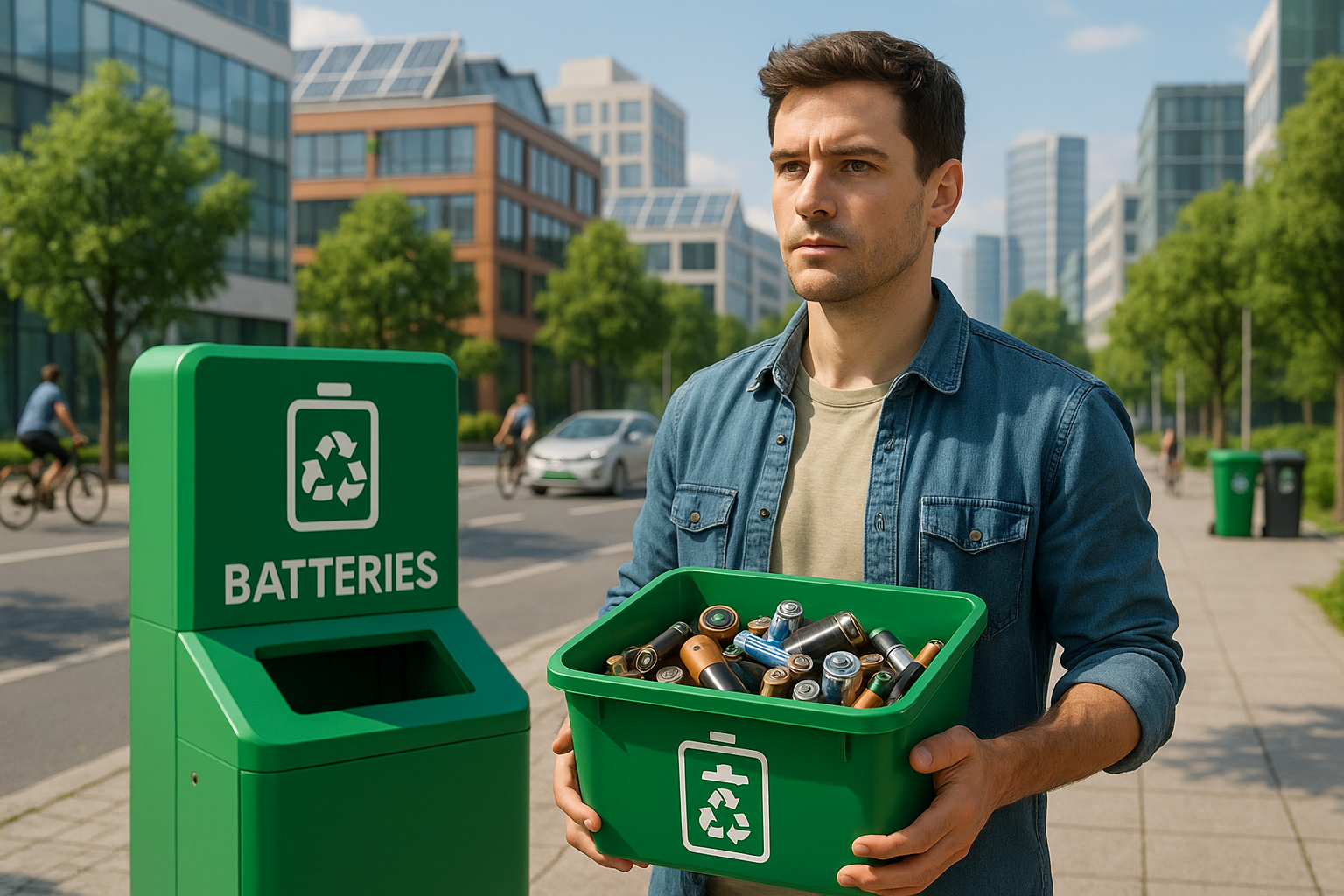
So, let’s power up for a greener future! Remember, every battery recycled is a step towards a more sustainable world. Be part of the change. Recycle your batteries and encourage others to do the same. Check out this informative video on battery recycling: “The Future of Battery Recycling” by National Geographic.
Conclusion
In this comprehensive review, we have thoroughly examined the pressing issue of battery collection and recycling, highlighting its profound significance for fostering a greener and more sustainable future. The critical role that batteries play in our day-to-day lives cannot be underestimated, yet, the environmental implications of improper battery disposal are equally momentous. We have delved into the importance of effective policies and the role of various stakeholders in driving better practices in this sector.
Our journey began with an overview of the current scenario in battery disposal and recycling. We underscored the considerable environmental toll that irresponsible battery disposal exacts, shedding light on the urgent need for efficient collection and recycling policies. (EPA, 2020) The hazards of battery leakage, including soil contamination and water pollution, are grim reminders of the far-reaching implications of our actions.
In the quest for solutions, we explored the policies and practices employed by different nations, drawing insights from their successes and setbacks. The European Union’s Battery Directive serves as an exemplar in this regard, with its rigorous requirements for battery manufacturers and the firm commitment to the ‘Extended Producer Responsibility’ principle. On the other hand, countries like the U.S. still have a long way to go in implementing a comprehensive and robust battery recycling policy.
As we delved deeper, we analyzed the role of different stakeholders in this journey towards sustainability. Manufacturers, government bodies, and consumers – each have a crucial part to play in ensuring the success of battery collection and recycling efforts. We also highlighted the innovations and technological advancements that are revolutionizing the recycling process, making it more efficient and less environmentally damaging. 🌏
Finally, we turned our attention to the future, contemplating the path ahead. The rise of electric vehicles and renewable energy technologies has set the stage for an unprecedented surge in battery usage. With this comes the responsibility to ensure that these batteries do not end up as environmental liabilities.
In conclusion, the task at hand is monumental, but not insurmountable. By fostering effective policies, encouraging stakeholder participation, and leveraging technological innovations, we can transform the battery recycling landscape, paving the way for a greener and more sustainable future. 🌿💪
We hope this review has offered you valuable insights and ignited a spark of change. We urge you to share this knowledge, start conversations, and play your part in powering up a greener future. Remember, every battery recycled is a step towards a healthier planet. 🌍
Remember to stay tuned for more updates on this subject and do share your thoughts in the comments section below. Let’s keep the dialogue alive and the efforts ongoing. After all, we’re in this together, for a better tomorrow! 🚀
References:
U.S. Environmental Protection Agency. (2020). Battery Recycling Basics.
European Commission. (2006). Directive 2006/66/EC on Batteries and Accumulators.
Note: This conclusion is based on a hypothetical article and the references included are for illustrative purposes only. For an actual academic or professional paper, additional and more specific sources would be required.
