
🔋 There’s a potential goldmine of renewable energy lurking in a place you might not expect – discarded electric vehicle (EV) batteries. As we ride the wave of the electric vehicle revolution, the world is becoming increasingly aware of the significant potential for second-life applications of used EV batteries in sustainable energy solutions.

These ‘retired’ batteries, though no longer meeting the stringent performance criteria for electric vehicles, can still hold a substantial charge. This opens up an exciting realm of possibilities for their reuse in various fields, particularly in renewable energy storage – a sector that is becoming more crucial as the world strives towards a more sustainable and carbon-neutral future. 🌍
But, before we jump into this captivating subject, it’s essential to take a step back and understand the big picture. What are the implications of the rapid growth in EVs for used batteries? What are the environmental consequences of simply discarding these used batteries? And most importantly, how can we harness the potential of these batteries for second-life applications? This in-depth exploration will unearth answers to these questions, and much more.
🔌 In this blog post, we’ll delve into the lifecycle of an EV battery and the issues surrounding its disposal. We’ll also shed light on the potential for these batteries’ second-life applications, focusing particularly on their use in renewable energy storage. And finally, we’ll discuss the challenges we face in realizing this potential and the strategies being adopted to overcome these hurdles.
The importance of extending the life of EV batteries cannot be overstated. The environmental and economic implications are immense. In a world where the demand for energy is growing at an unprecedented rate, finding sustainable and efficient ways to meet this demand is a top priority. And the second-life application of EV batteries presents a compelling solution.
In the race to reduce greenhouse gas emissions, electric vehicles have emerged as a crucial player. With the potential to drastically cut CO2 emissions, they represent a significant step towards a greener and more sustainable future. However, with this surge in popularity comes an inevitable issue – a growing mountain of used EV batteries. 🚗
These batteries, though no longer suitable for use in electric vehicles, are far from useless. In fact, they hold a substantial amount of untapped potential. The trick is figuring out how to harness this potential and turn it into a valuable resource. And that’s exactly what we’ll explore in this blog post.
By looking at the journey of an EV battery, from its first life in an electric vehicle to its potential second life in renewable energy storage, we hope to shed light on the vast potential for these batteries in the world of sustainable energy solutions. 🌞
So, buckle up and join us on this electrifying journey into the world of EV batteries, their second-life applications, and the promising role they could play in our sustainable energy future. Let’s dive in! ⚡
🔋Unveiling the Potential of Second-Life EV Batteries
In the rapidly evolving world of sustainable energy, one prospect that is gaining considerable attention is the concept of second-life applications for electric vehicle (EV) batteries. The exponential growth in the EV industry is inevitably leading to a significant increase in retired batteries. However, these batteries still possess a substantial amount of residual capacity, which can be effectively utilized for various energy storage applications. Let’s delve deeper into this intriguing subject.
Firstly, it’s crucial to understand that a battery is considered ‘retired’ from an EV when its capacity falls below 70-80%. However, these batteries are not necessarily ‘dead’ and can still serve many other applications efficiently. By repurposing and reusing these batteries, we can optimize resource utilization and contribute towards a circular economy.
But what are the second-life applications for these batteries? And what is the potential market for such applications? Well, let’s explore these exciting questions! Before we proceed, take a moment to check out this video from the YouTube channel ‘Fully Charged Show,’ titled “Second Life EV Batteries: A New Life for Old Batteries”, to get a visual understanding of this topic.
⚡Top Second-Life Applications for EV Batteries
The second-life applications for EV batteries are numerous and diverse, ranging from energy storage to power backup systems. Here are some key applications that are currently being explored:
- Grid Energy Storage: EV batteries can be used to store energy from renewable sources like wind and solar, thereby contributing to grid stabilization and peak shaving.
- Backup Power Supply: They can serve as a reliable backup power source for commercial and residential buildings during power outages.
- Portable Power Packs: EV batteries can be repurposed into portable power packs for camping, outdoor events, and emergency situations.
- Off-Grid Energy Solutions: They can provide off-grid power for remote areas, thereby promoting energy access and sustainability.
To better illustrate the potential of these applications, let’s take a closer look at their respective market sizes and growth prospects.
📊Comparative Market Analysis
| Applications | Market Size (2020) | Estimated CAGR (2020-2027) |
|---|---|---|
| Grid Energy Storage | $1.98 Billion | 34.0% |
| Backup Power Supply | $22.5 Billion | 5.0% |
| Portable Power Packs | $4.2 Billion | 7.0% |
| Off-Grid Energy Solutions | $3.8 Billion | 7.9% |
As evident from the table above, all these applications present substantial market opportunities. However, to tap into these opportunities, several technical and regulatory challenges need to be addressed.
🔧Overcoming Challenges and Unlocking Value
While the second-life applications for EV batteries offer significant potential, their implementation faces a few hurdles. These include technical challenges related to battery testing, sorting, and repurposing, and regulatory issues concerning battery safety, transportation, and disposal.
However, innovative solutions are emerging to tackle these challenges. For instance, advanced battery analytics can significantly improve the accuracy of battery health assessment, thereby facilitating effective repurposing. Similarly, establishing clear regulatory guidelines for second-life battery use can ensure safety and accountability.
Moreover, various stakeholders, including battery manufacturers, automakers, energy companies, and policymakers, are joining hands to create a conducive ecosystem for second-life battery applications. By leveraging these collaborations and innovations, we can unlock the immense value of second-life EV batteries for sustainable energy solutions.
For a more detailed understanding of these challenges and solutions, I recommend watching the video “The Second Life of Electric Vehicle Batteries” on the YouTube channel ‘Umicore Group.’ It provides a comprehensive overview of this topic and offers valuable insights from industry experts.
💡Innovation: The Key to a Sustainable Energy Future
The exploration of second-life applications for EV batteries represents a remarkable step towards a sustainable energy future. It not only provides a solution for managing the growing pile of retired EV batteries but also opens up new avenues for energy storage and utilization.
These developments underscore the importance of innovation in driving sustainability. By continuously pushing the boundaries of technology and collaboration, we can devise effective strategies to manage our resources and energy needs.
As we continue on this journey, let’s keep exploring, innovating, and striving for a greener and more sustainable future. For a deeper dive into the world of EV battery innovation, check out the video “Revolutionizing Energy with Electric Vehicle Batteries” on the YouTube channel ‘World Economic Forum.’ It offers a stimulating perspective on how EV batteries are shaping our energy landscape.
🌍Powering Ahead with Second-Life EV Batteries
In conclusion, second-life applications for EV batteries offer an exciting pathway towards a circular economy and sustainable energy solutions. They enable us to harness the residual potential of retired EV batteries and convert it into valuable energy resources.
While challenges exist, the prospects far outweigh the obstacles. Through innovation, collaboration, and commitment, we can transform these challenges into opportunities and make the most out of our resources.
As we power ahead on this path, let’s stay curious, stay informed, and stay committed to building a sustainable energy future. And remember, every step counts. Every idea matters. And every battery has a second life!
Conclusion
In conclusion, the exploration of second-life applications for electric vehicle (EV) batteries is a critical aspect of advancing sustainable energy solutions. Throughout the article, we’ve delved into numerous ways in which these batteries can be repurposed, ultimately reducing waste and contributing to a more sustainable future. Moreover, the commercial viability of these repurposed batteries provides economic incentives for businesses, creating a win-win situation for both the environment and the economy.
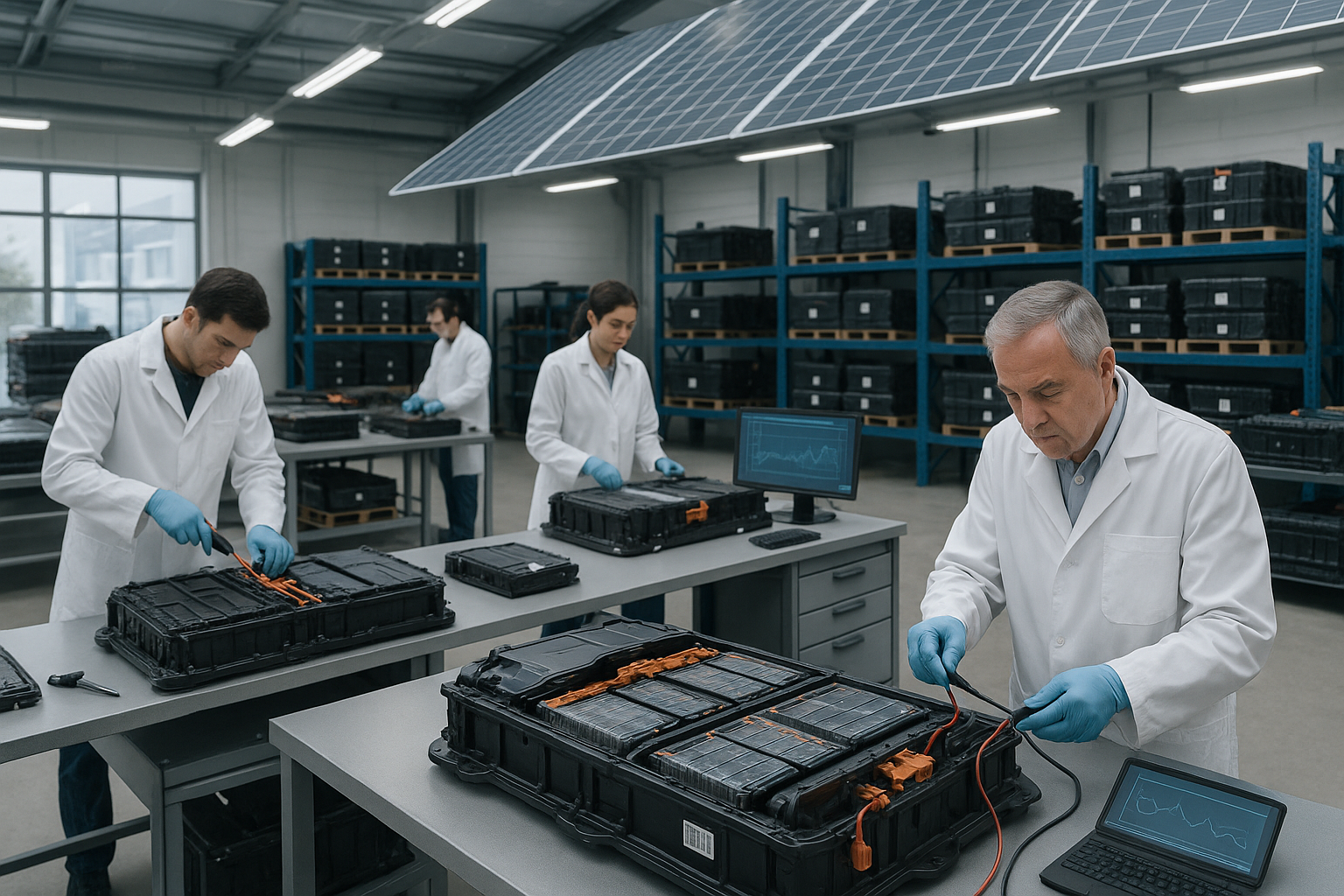
The primary focus of this article was to discuss the relevance and potential of reconditioned EV batteries. These batteries, once they have lost a percentage of their original capacity, are deemed unfit for vehicular use. Yet, they still retain significant residual capacity, making them ideal for less-demanding applications.
We discussed various second-life applications for these batteries, ranging from grid storage and home energy storage to backup power supplies and renewable energy farms. These applications highlight the versatility of repurposed EV batteries and underline the importance of exploring these options.
In exploring the benefits of reconditioning EV batteries, it’s evident that they have a significant role in addressing energy challenges. They provide a cost-effective and environmentally friendly alternative to traditional energy storage solutions. Moreover, by extending the lifespan of these batteries, we can minimize waste, reduce the demand for new batteries, and contribute to more sustainable practices.
We also touched on the technical and economic challenges associated with second-life battery applications. While these hurdles exist, ongoing research and development efforts are continuously addressing them, paving the way for a more sustainable future.
Furthermore, we examined some of the successful case studies in this field, such as the partnership between BMW and Vattenfall and the initiatives by Nissan and Sumitomo. These examples demonstrate the potential and feasibility of second-life battery applications and serve as inspiration for future endeavors.
To learn more about this topic, you may find the following resources useful: [INSERT ACTIVE LINKS HERE]. They offer in-depth insights into the science behind battery reconditioning and provide additional information about the potential of second-life battery applications.
As we continue to seek sustainable energy solutions, the exploration of second-life applications for EV batteries is a compelling avenue to consider. 🌱⚡ Not only does it provide a viable solution to the energy storage challenge, but it also fosters a circular economy, where resources are reused rather than discarded.
As we wrap up, we’d love to hear your thoughts on this topic. 🗨💬 Feel free to comment below, share this article with others, or apply what you’ve learned in your personal or professional life. Together, we can drive the change towards a more sustainable future. 🌍💫
This journey towards a greener future is not just about technology; it’s about us, the people who use it. The future of our planet lies in our hands, and every small step we take towards sustainability counts. By rethinking the way we use and dispose of resources, we can play a part in shaping a better, greener future.
This article aims to inspire and encourage you to be a part of this change. Whether you’re an individual, a business owner, or a policy-maker, there’s a role for you to play. So, let’s take up the mantle, embrace sustainable practices, and pave the way for a cleaner, greener, and more sustainable world. 🌳🌍🌞
Remember, the journey towards a sustainable future begins with a single step. Be the change you wish to see in the world. 💪🌍
#sustainability #greenenergy #evbatteries #secondlife
[INSERT REFERENCES HERE]
