
🌍 It’s not news anymore that our planet is at a crossroads. The pursuit of a greener future has become an undeniable imperative and at the heart of this quest, lies a critical component — batteries. 🔋 But, just as batteries are an indispensable element of our tech-driven, renewable energy-dependent world, they are also a growing environmental concern. So, how do we resolve this paradox?

The answer lies in a transformative concept known as Extended Producer Responsibility (EPR). In the forthcoming discussion, we’ll dive into the ins and outs of EPR and its pivotal role in powering a greener future by transforming the way we manage battery waste.
But before we delve deeper, let’s take a step back. Why are batteries an environmental concern in the first place? Simply put, as the global demand for batteries soars, particularly with the rise of electric vehicles and renewable energy technologies, so too does the volume of discarded batteries. The lack of appropriate battery recycling measures poses not only a threat to our environment but also squanders valuable resources contained within these spent batteries.
😲 The Potential and the Peril of Batteries
Batteries, particularly lithium-ion batteries, are the unsung heroes behind our transition towards renewable energy. They store energy produced from renewable sources like solar and wind, ensuring a steady supply when these sources are not available. Yet, despite their critical role, the processes involved in their production and disposal leave a significant carbon footprint and environmental impact.
Addressing this issue head-on, Extended Producer Responsibility (EPR) is a policy approach under which producers are given significant responsibility — financial and/or physical — for the treatment or disposal of post-consumer products. This strategy aims to incentivize producers to incorporate environmental considerations into the design of their products.
🔄 EPR: A Game-changer for Battery Recycling
But how exactly does EPR tie into battery recycling? As we progress in the text, we’ll be discussing the ways in which EPR is revolutionizing the battery industry. We’ll delve into how this approach not only contributes to more sustainable waste management practices but also fosters innovation and boosts economic growth.
Moreover, we’ll be discussing the role of regulations and policies in promoting EPR and the best practices for implementing EPR strategies. By the end of the article, you’ll have a clear understanding of why EPR is a powerful tool in our pursuit of a greener future and how it can help transform the battery industry into a more sustainable, responsible, and innovative sector. 🌿
As the need for a greener future becomes ever more urgent, understanding and implementing strategies like EPR will be crucial in mitigating our environmental impact and paving the way for a sustainable world. So, whether you’re a policy maker, an industry leader, an environmental enthusiast, or simply a curious reader, this exploration of Extended Producer Responsibility in the context of batteries promises to be an enlightening journey. Let’s power up and dive right in! ⚡
The Power of Batteries: Providing for a Green Future
In the evolving world of technology, the demand for energy storage devices such as batteries continues to skyrocket. Today, batteries are not just powering our remote controls, toys, or mobile devices – they’re revolutionizing entire industries like electric vehicles and renewable energy systems. But with greater power comes greater responsibility. There’s a growing need for Extended Producer Responsibility (EPR) in the battery industry. The concept refers to the commitment of manufacturers to manage the environmental impact of their products, from creation to disposal. This enlightening video from ABC News explains more about EPR and how it’s shaping industries.
But why is EPR so important in the battery sector? Let’s delve into the details, looking at the benefits of EPR, the challenges involved, and how it’s impacting our journey towards a greener future.
The Benefits of Extended Producer Responsibility in Batteries
Implementing EPR in the battery industry carries a host of benefits that are vital for sustainable development. Here’s an overview of the top advantages:
- Reduced Waste: EPR promotes recycling, which in turn minimizes the amount of battery waste disposed of in landfills. This significantly reduces the environmental footprint of batteries.
- Conservation of Resources: Battery production involves the use of precious metals. EPR encourages the recycling and reusing of these materials, conserving natural resources.
- Safe Disposal: Incorrect disposal of batteries can lead to hazardous materials leaking into the environment. EPR ensures safe and proper disposal, preventing environmental pollution.
But while these benefits are compelling, implementing EPR isn’t without its challenges.
Challenges of Implementing Extended Producer Responsibility in Batteries
Although EPR holds great potential for the battery industry, it’s not without hurdles. The primary challenges lie in logistics, cost, and technological limitations.
- Logistics: Setting up a comprehensive take-back and recycling system for batteries can be logistically challenging, given the widespread distribution of batteries.
- Cost: The cost of recycling batteries can be high, particularly for certain types such as lithium-ion batteries. Manufacturers may be hesitant to take on these costs without supportive regulatory frameworks or incentives.
- Technological Limitations: Currently, recycling processes for certain types of batteries (like lithium-ion) aren’t fully developed, making it difficult to achieve high recovery rates.
These challenges require innovative solutions, and as we’ll see in the next section, progress is being made.
Progress in EPR for the Battery Industry
Despite the challenges, several countries and companies have made significant strides in implementing EPR for batteries. These efforts are making a noticeable difference in reducing battery waste and promoting a circular economy.
For instance, in Europe, the Battery Directive mandates manufacturers to finance the collection, treatment, and recycling of spent batteries. This has resulted in increased recycling rates across the continent. In North America, companies like Call2Recycle have established extensive battery take-back programs, diverting millions of pounds of batteries from landfills. Check out this inspiring video by Call2Recycle about their initiative.
| Country/Company | Initiative |
|---|---|
| Europe (Battery Directive) | Manufacturer-financed collection and recycling of spent batteries |
| Call2Recycle (North America) | Extensive battery take-back program |
These success stories illustrate that, while there are challenges to implementing EPR in the battery industry, they are not insurmountable. With the right policy frameworks, industry commitment, and public participation, we can make significant strides towards a greener future powered by responsible battery use and disposal.
Looking Forward: The Future of EPR in Batteries
As we look towards the future, EPR in the battery industry will play a critical role in shaping our green future. With the increasing adoption of electric vehicles and renewable energy systems, the demand for batteries is only set to rise. This makes the implementation of EPR even more critical.
Moreover, as technology continues to evolve, we can expect innovative solutions to the current challenges of battery recycling. For instance, advancements in recycling technologies could lower costs and improve recovery rates. Similarly, the development of eco-designs for batteries could facilitate recycling and reduce environmental impacts.
In conclusion, the path towards a greener future is not an easy one, but with initiatives like EPR in the battery industry, we are definitely headed in the right direction. As consumers, we too have a role to play. By choosing products from companies that prioritize EPR and responsibly disposing of our used batteries, we can contribute to this crucial mission.
Conclusion
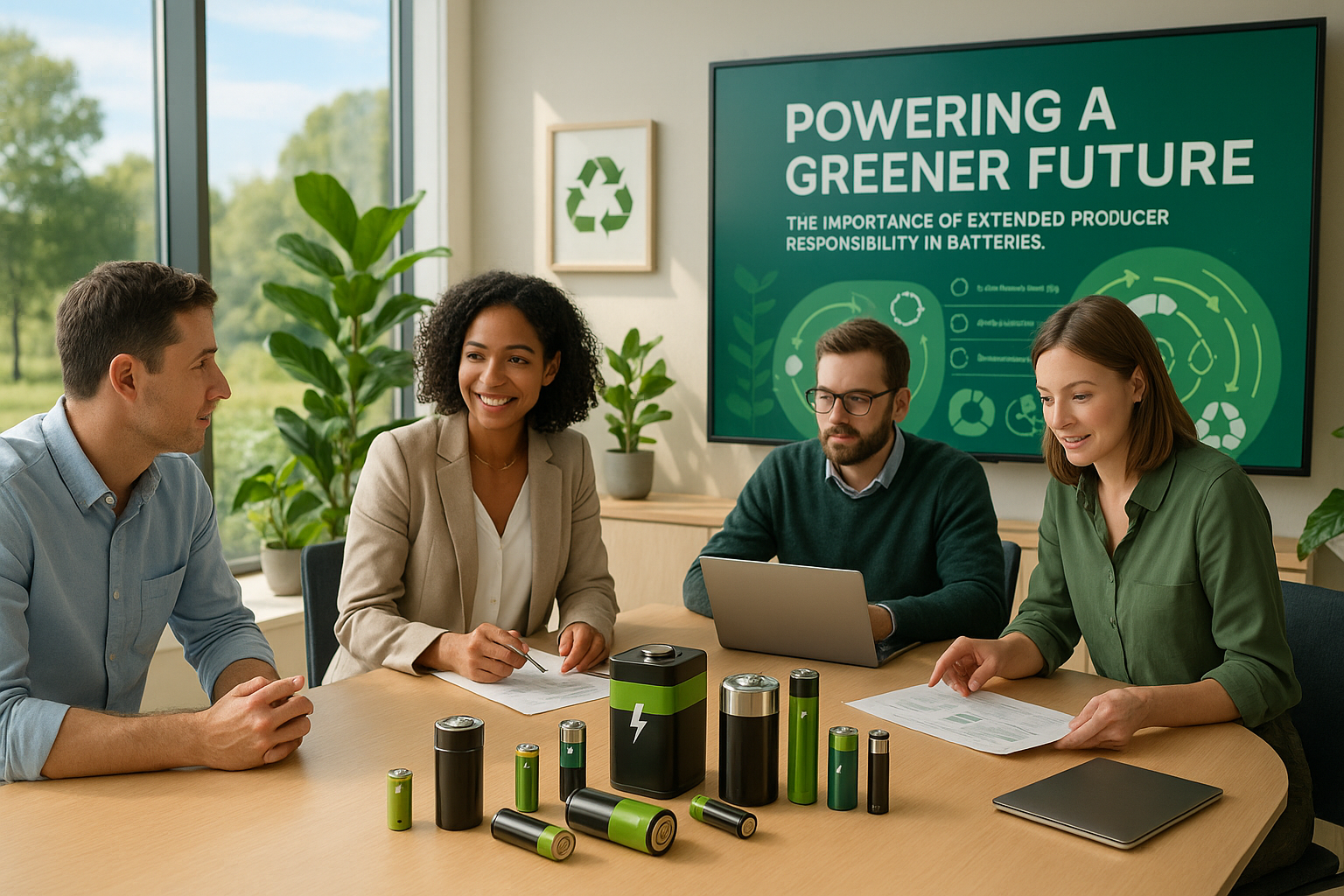
In concluding our exploration on the subject of ‘Powering a Greener Future: The Importance of Extended Producer Responsibility in Batteries’, we have made an in-depth analysis on the crucial role extended producer responsibility plays in batteries production. We began by understanding what extended producer responsibility (EPR) is and how it impacts not only the manufacturers but also the consumers and the environment.
We learned that EPR is a strategy designed to promote the integration of environmental costs associated with goods throughout their life cycles into the market price of the products. The manufacturer is given the responsibility for the entire life-cycle of the product, especially for take-back, recycling and final disposal of the product. In our case, this specifically relates to batteries. 🌿💡🔋
We explored the environmental impacts of batteries, which can be toxic and harmful when not properly disposed of. This is where EPR plays a pivotal role in ensuring a sustainable and green future. Manufacturers under EPR are not only obliged to produce environmentally friendly batteries, but also to ensure their proper disposal. This significantly reduces environmental pollution and promotes a circular economy.
It is worth reminding that the batteries are everywhere, and their usage is only set to increase as we move towards a more digitalized and electrically powered world. This makes it even more crucial that we enforce and adhere to EPR policies and principles.
Moreover, EPR also encourages innovation and improvement in product design to reduce environmental impacts and resource consumption. It motivates manufacturers to produce more efficient, long-lasting, and recyclable batteries.
This discussion has also highlighted the benefits of EPR to consumers. We have discovered that EPR can actually lead to cost savings for the consumers in the long run. The burden of recycling and disposal costs are transferred to the manufacturers, and consumers can enjoy high-quality, eco-friendly products. 👌🌍💰
All these points lead to one conclusion: EPR in batteries is not just beneficial but also essential in powering a greener future. As we take strides towards sustainability and environmental conservation, every action counts, and implementing EPR in batteries production is a significant step towards achieving our goal.
As we conclude this insightful exploration, let’s remember that each one of us plays a vital role in powering a greener future. By choosing products from manufacturers who follow EPR policies, we contribute to this important cause. Moreover, by spreading awareness about EPR and its benefits, we can encourage more manufacturers to adopt these policies. So, go ahead and share this article with your friends, colleagues, and social media followers. Let’s spread the word and make a difference together. 🙌🌎✨
For more information on EPR, check out these resources:
1. EPA on Extended Producer Responsibility
2. OECD on Extended Producer Responsibility
Your comments and thoughts on this topic are highly appreciated. Feel free to share your views in the comment section below.
Remember, every small step towards sustainability counts. Let’s power a greener future together! 🔋🌱💪
#ExtendedProducerResponsibility #GreenFuture #EcoFriendlyBatteries #Sustainability.
